
August 24: National Waffle Day: -- The
anniversary of the first waffle iron patent issued. Celebrate by
savoring your favorite kind of waffle! On August 24, 1869,
Cornelius Swarthout of Troy, New York received his patent for the
waffle iron. While waffles existed long before then, the invention
made waffles more readily available. Eaten throughout the world, a
waffle is a leavened batter or dough. When cooked between two
patterned plates, the dough bakes in the waffle's characteristic
uniform impressed surface. Waffles also come in many forms.
Depending on the type of batter or iron used, the resulting waffle
varies by consistency, size, shape, and flavor. Waffle irons and
waffles originated around the 14th century. To observe National
Waffle Day: Enjoy your favorite waffle recipes! Or visit a local
restaurant for some fresh served waffles. Restaurants across the
country specialize in waffles, crafting delicious combinations for
every meal of the day. No matter your preference, there's a waffle
for you! Invite friends over for a waffle making party. Set up a
buffet with fresh fruit, syrups, and nuts. Ask them to bring their
best ingredients and get tasting -- you never know what you'll
discover! On Sale Until Midnight Tonight PT!
https://store.earthstation1.com/tv-commercials-the-classics-vol-2-dv2.html
August 24: National Knife Day: -- Today
we celebrate one of humankind's very first tools. This is the day
to appreciate the knives that we use on a daily basis. Knives have
been made of bone, stone, and flint, and today, they are made
using titanium, bronze, iron, and steel. We use knives for
cooking, eating, fishing, hunting, and a host of other tasks. The
day is celebrated by showing off your chopping skills, buying a
new set of knives, and even comparing and swapping your knives
with other like-minded people. Doesn't matter if you are a skilled
fisherman or a chef, National Knife Day is a celebration for
everyone who's ever used the tool. It is difficult to say who
started National Knife Day or when they started it, but it seems
like the celebrations have been in place since 2011. The knife is
one of the earliest tools known to humankind, that was invented
from the need for survival. Initially, knives were used as
primitive tools for digging and construction, as weapons, and to
hunt, fish, and gather food. Unlike today, it was common for
prehistoric humans to carry a knife with them at all times. The
first knives were made of stones as sharpened stone tools became
more advanced during the late Lithic periods. During the Copper
and Bronze Ages, metal blades appeared, which quickly replaced
knives made of stone. However, these knives weren't as durable as
their predecessors. During the Iron age, tools became stronger and
more durable. Iron knives were followed by steel blades, and they
have remained pretty much the same since then. Steel blades made
of iron alloys are the most common today, while cobalt alloys and
titanium are also popular choices. Early knives didn't have a
separate handle and blade. For decorative purposes and easy use,
handles began being made out of carved bone, wood, and metal.
Today, wood is one of the most popular materials used for knife
handles. There's also been an advent of a separate handle with the
invention of folding knives. Knives serve a host of different
purposes in the present day. We use knives to prepare and eat
food, for medical purposes, and carving. There are various types
of kitchen knives such as chef's, utility, paring, and bread
knives. Most knives are affordable to just about anyone, but there
are high-end custom knives that sell for a whopping 400 USD or
more! On Sale Until Midnight Tonight PT!
https://store.earthstation1.com/pioneers-of-surgery-dvd-set-4-episode-tv-series-2-dis42.html
August 24: International Strange Music
Day: -- This is a day for all the music lovers who have a soft
corner for the unique and bizarre, especially when it comes to
music and songs. International Strange Music Day also encourages
the rest of us to switch up our regular playlist for something
eccentric and unusual. Of course, 'strange' doesn't mean that you
have to listen to something that doesn't please you - you could
also listen to new genres of music, artists, and even music in
different languages. The choice is entirely yours! The ultimate
aim of International Strange Music Day is to expand our taste in
music. International Strange Music Day was created by Patrick
Grant, a New York City musician and composer. The aim of the
celebration was to get people to play and listen to types of music
that they had not before. Grant believed that something as simple
as broadening our musical taste can also make us broadminded and
more accepting of others. He follows the mantra 'listening without
prejudice.' Grant also picked the day to promote his new album
"Fields Amaze" in 1997, as a way to honor his
girlfriend's father (and his artistic mentor) on his birthday. By
2002, the day became an international phenomenon with various
artists and venues. This growing movement is now attached to
concerts, hosts a record label, and gains popular support from
summer schools. The day is also appreciated as a great way to
stimulate young minds. In 2012 the celebrations took a new
direction when Grant challenged the musicians of New York City to
participate in an International Strange Music Day Performance
Soiree. A number of strange bands and musicians such as Jolly
Ramey, The Dreamscape Floppies, Da Groove Commanders, Micro-tons
o' Fun, and many more participated in the soiree and it turned out
to be a huge success! Since then other events have been hosted in
honor of the day in New York City along with other towns and
cities all around the country. The University of London also has
grand celebrations of the day with events, competitions,
sing-alongs, and band performances. On Sale Until Midnight Tonight
PT!
https://store.earthstation1.com/frank-zappa-documentaries-mp4-video-download-dv4.html
August 24: National Pluto Demoted Day: --
Can you believe that after nearly 80 years as an official planet,
Pluto was demoted down to a dwarf planet? In 2006 the
International Astronomical Union (IAU) determined that since Pluto
is not the dominant object in its orbit around the sun, it could
no longer be an official planet. Other large bodies - like Pluto's
own moon, are found in its region. Pluto was discovered in 1930 by
astronomer Clyde Tombaugh, making it the ninth planet in our solar
system. It's a relatively cold planet that exists outside the
orbit of Neptune. After its discovery, Lowell Observatory had over
1,000 suggestions for what to name the newly found planet. The
eventual winner was Pluto, named after the Roman god of the
underworld. In 1992, questions arose around Pluto's legitimacy as
a planet after the discovery of large objects in its region,
including one that actually had a larger mass than Pluto itself.
Eventually, in 2006, the International Astronomical Union (IAU)
settled on a definition for 'planet,' which ultimately excluded
Pluto. From that point forward, it has been known as a 'dwarf
planet.' A dwarf planet is defined as is a celestial body that
orbits the sun and has enough mass to assume a nearly round shape
but that has not cleared the area around its orbit and is not a
moon. On Sale Until Midnight Tonight PT!
https://store.earthstation1.com/the-old-time-radio-scifi-paranormal-megaset-dual-layer-mp3-dv3.html

August 24: Vesuvius Day: -- August 24, 79
AD: The Eruption Of Mount Vesuvius Of 79 AD: Mount Vesuvius in
Campania on the Gulf of Naples in southern Italy, which the day
prior began to stir on the feast day of Vulcan, the Roman god of
fire after whom volcanoes are ultimately named, violently erupts
in its best-known, and one of its deadliest, of the many eruptions
of this major stratovolcano (composite volcano), spewing forth a
cloud of super-heated tephra and gases to a height of 33 km (21
mi), ejecting molten rock, pulverized pumice and hot ash at 1.5
million tons per second, ultimately releasing 100,000 times the
thermal energy of the atomic bombings of Hiroshima and Nagasaki.
The event gives its name to the Vesuvian type of volcanic
eruption, characterised by columns of hot gases and ash reaching
the stratosphere, although the event also included pyroclastic
flows associated with Pelean eruptions. The event destroyed
several Roman towns and settlements in the area. Pompeii, Stabiae
and Herculaneum, obliterated and buried underneath massive
pyroclastic surges and ashfall deposits, are the most famous
examples. Archaeological excavations have revealed much of the
towns and the lives of the inhabitants leading to the area
becoming the Vesuvius National Park and a UNESCO World Heritage
Site. The total population of both cities was over 20,000. The
remains of over 1,500 people have been found at Pompeii and
Herculaneum so far, although the total death toll from the
eruption remains unknown. The dating of this eruption has always
been problematic. It is mentioned in first-century Roman sources,
but not the day of the eruption. For example, Josephus in his
Antiquities of the Jews mentions that the eruption occurred "in
the days of Titus Caesar." Suetonius, a second-century
historian, in his Life of Titus simply says that, "There were
some dreadful disasters during his reign, such as the eruption of
Mount Vesuvius in Campania." Writing well over a century
after the actual event, Roman historian Cassius Dio (as translated
in the Loeb Classical Library 1925 edition) wrote that, "In
Campania remarkable and frightful occurrences took place; for a
great fire suddenly flared up at the very end of the summer."
For more than five centuries, until approximately 2018, articles
about the eruption of Vesuvius typically stated that the eruption
began on August 24 of 79 AD. This date came from a 1508 printed
copy of a letter addressed by Pliny the Younger to the Roman
historian Tacitus, originally written some 25 years after the
event. Pliny was a witness to the eruption and provided the only
known eyewitness account. Over fourteen centuries of manuscript
hand-copying up to the 1508 printing of his letters, the date
given in Pliny's original letter may have been corrupted.
Manuscript experts believe that the date originally given by Pliny
was one of August 24, October 30, November 1, or November 23. This
odd scattered set of dates is due to the Romans' convention for
describing calendar dates. The large majority of extant medieval
manuscript copies - there are no surviving Roman copies - indicate
a date corresponding to August 24. Since the discovery of the
cities, this was accepted by most scholars and by nearly all books
written about Pompeii and Herculaneum for the general public.
Since at least the late 18th century, a minority among
archaeologists and other scientists have suggested that the
eruption began after August 24, during the autumn, perhaps in
October or November. In 1797 the researcher Carlo Rosini reported
that excavations at Pompeii and Herculaneum had uncovered traces
of fruits and braziers indicative of autumn, not the summer. More
recently, in 1990 and 2001, archaeologists discovered more
remnants of autumnal fruits (such as the pomegranate), the remains
of victims of the eruption in heavy clothing, and large
earthenware storage vessels laden with wine (at the time of their
burial by Vesuvius). The wine-related discovery suggests that the
eruption might have happened after the grape harvest. In 2007, a
study of prevailing winds in Campania showed that the
southeasterly debris pattern of the first-century eruption is
quite consistent with an autumn event and inconsistent with an
August date. During June, July, and August, the prevailing winds
flow to the west - an arc between the southwest and northwest -
virtually all the time. As Emperor Titus of the Flavian dynasty
(reigning June 24, 79 to September 13, 81) garnered victories on
the battlefield (including his capture of the Temple of Jerusalem)
and other honors, his administration issued coins enumerating his
ever-growing accolades. Given the limited space on each coin, his
achievements were stamped on the coins using an arcane encoding.
Two of these coins, from early in Titus' reign, were found in a
hoard recovered at Pompeii's House of the Golden Bracelet.
Although the coins' minting dates are somewhat in dispute, a
numismatic expert at the British Museum, Richard Abdy, concluded
that the latest coin in the hoard was minted on or after June 24
(the first date of Titus' reign) and before September 1 of 79 AD.
Abdy states that it is "remarkable that both coins will have
taken just two months after minting to enter circulation and reach
Pompeii before the disaster." In October 2018, Italian
archaeologists uncovered a charcoal inscription reading "the
16th day before the calends of November," dated October 17
(of 79 AD as it was unlikely to have been a year old) which sets
the earliest possible date for the eruption. A collaborative study
in 2022 has determined a date of October 24-25. On Sale @ 15% Off
Discount Till Midnight PT!
https://store.earthstation1.com/you-are-there-historical-old-time-radio-mp3-c3.html
August 24: Ukraine Independence Day
(Independence Day Of Ukraine): -- August 24, 1991: The Aftermath
Of World War II: The Cold War: The Cold War (1985-1991) (The End
Of The Cold War): The Dissolution Of The Soviet Union: The
Declaration Of State Sovereignty Of Ukraine (Ukrainian:
Deklaratsiia Pro Derzhavnyi Suvernitet Ukrainy): The Declaration
Of Independence Of Ukraine: The Act Of Declaration Of Independence
Of Ukraine (Ukrainian: Akt Proholoshennia Nezalezhnosti Ukrainy):
-- The Ukrainian Supreme Soviet (parliament) adoption of the Act
of Declaration Of Independence of Ukraine declares itself
independent from the Soviet Union. The Act was adopted in the
aftermath of the coup attempt on August 19 when hardline Communist
leaders of the Soviet Union tried to restore central Communist
party control over the USSR. In response, during a tense
eleven-hour extraordinary session, the Supreme Soviet of the
Ukrainian SSR in a special Saturday session overwhelmingly
approved the Act of Declaration. The Act passed with 321 votes in
favor, 2 votes against, and 6 abstentions (out of 360 attendants).
The author of the text was Levko Lukyanenko. The Communists (CPU)
felt there was no choice other than a decision to secede and, as
they expressed it, distance themselves from the events in Moscow,
particularly the strong anti-Communist movement in the Russian
Parliament. "If we don't vote for independence, it will be a
disaster," stated first secretary of the CPU Stanislav
Hurenko during the debate. The same day (24 August), the
parliament called for a referendum on support for the Declaration
Of Independence. The proposal for calling the national referendum
came jointly from opposition leaders Ihor Yukhnovsky and Dmytro
Pavlychko. The Parliament also voted for the creation of a
national guard of Ukraine and turned jurisdiction over all the
armed forces located on Ukrainian territory over to itself. Other
than a noisy crowd that had gathered at the Parliament building,
the streets of Kiev were quiet that day, with few signs of open
celebration. In the days that followed a number of resolutions and
decrees were passed: nationalizing all CPU property and handing it
over to the Supreme Soviet and local councils; issuing an amnesty
for all political prisoners; suspending all CPU activities and
freezing CPU assets and bank accounts pending official
investigations into possible collaboration with the Moscow coup
plotters; setting up a committee of inquiry into official behavior
during the coup; and establishing a committee on military matters
related to the creation of a Ministry of Defense of Ukraine. On 26
August 1991 the Permanent Representative of the Ukrainian SSR to
the United Nations (the Ukrainian SSR was a founding member of the
United Nations) Hennadiy Udovenko informed the office of the
Secretary General of the United Nations that his permanent mission
to this international assembly would officially be designated as
representing Ukraine. On 26 August 1991 the executive committee of
Kiev also voted to remove all the monuments of Communist heroes
from public places, including the Lenin monument on the central
October Revolution Square. The large square would be renamed
Maidan Nezalezhnosti (Independence Square) as would the central
Metro station below it, the executive committee decided. On 28
August 1991 more than 200,000 Lviv (Lvov) and Lviv oblast (Lviv
province) residents declared their readiness to serve in the
national guard. In the independence referendum on 1 December 1991,
the people of Ukraine expressed widespread support for the Act of
Declaration Of Independence, with more than 90% voting in favor,
and 82% of the electorate participating. The referendum took place
on the same day as Ukraine's first direct presidential election;
all six presidential candidates supported independence and
campaigned for a "yes" vote. The referendum's passage
ended any realistic chance of the Soviet Union staying together
even on a limited scale; Ukraine had long been second only to
Russia in economic and political power. A week after the election,
newly elected president Leonid Kravchuk joined his Russian and
Belarusian counterparts in signing the Belavezha Accords, which
declared that the Soviet Union had ceased to exist. The Soviet
Union officially dissolved on 26 December. Since 1992, the 24th of
August is celebrated in Ukraine as Independence Day. Poland and
Canada were the first countries to recognize Ukraine's
independence, both on December 2, 1991. The same day the President
of the Russian SFSR Boris Yeltsin did the same. The United States
did so on December 25, 1991. That month the independence of
Ukraine was recognized by 68 states, and in 1992 it was recognized
by another 64 states. On Sale Until Midnight Tonight PT!
https://store.earthstation1.com/the-second-russian-revolution-6-dvd-set-complete-tv-serie6.html

August 24, 394: Archaelogy (Archeology):
Great Discoveries Of Archaeology: Ancient Egypt: Egyptology:
Decipherment: Egyptian Hieroglyphs: The Graffito Of Esmet-Akhom:
-- The latest known inscription in Egyptian hieroglyphs, The
Graffito Of Esmet-Akhom, is written in The Temple Of Isis At
Philae in southern Egypt on the occasion of the August 24th
birthday of the deity Osiris, year 110 (of Diocletian). The figure
on the left is meant to depict a king wearing a crown and the text
in the top right is relating to a royal decree. The hieroglyphic
inscription reads: "Before Merul son of Horus, by the hand
(?) of (?) Esmet-Akhom(?) son of Esmet, second prophet of Isis,
for ever and ever. Words spoken by Merul, lord of Abaton, great
god.". In 395, Roman Emperor Theodosius I banned all pagan
rituals, and the art Egyptian hieroglyphic writing was thereafter
lost. On Sale Until Midnight Tonight PT!
https://store.earthstation1.com/legacy-with-michael-wood-world-history-tv-series-dvd-mp4-us4.html

August 24-25, 1814: The Anglo-French Wars
(1109-1815): The Second Hundred Years' War: The United States And
The French Revolutionary And Napoleonic Wars: The Sixty Years' War
(French: Guerre De Soixante Ans) (1754-1815): The American Indian
Wars (The American Frontier Wars, The Indian Wars): The War Of
1812: The Burning Of Washington: -- During the War Of 1812,
Washington D.C. was invaded by British forces that burned the
Capitol, the White House and most other public buildings along
with a number of private homes. The burning was in retaliation for
the earlier American burning of York (Toronto). After defeating
the Americans at the Battle of Bladensburg, a British force led by
Major General Robert Ross burned down buildings including the
White House (known as the Presidential Mansion), and the Capitol,
as well as other facilities of the U.S. government. The attack was
in part a retaliation for the 14-16 May 1814 American Raid On Port
Dover in Upper Canada, and before that, for the 28-30 April 1913
Burning Of York, the destruction the American victorry at The
Battle Of York of the Parliament buildings and other public
buildings in York, the predecessor to the old city of Toronto
(1834-1998) and the provincial capital of Upper Canada. Throughout
the history of the United States, the United Kingdom is the only
country to have ever captured Washington, D.C.; the Burning of
Washington also marks the only time since the American
Revolutionary War that a foreign power has captured and occupied
the United States capital. President James Madison, military
officials, and his government fled the city in the wake of the
British victory at the Battle of Bladensburg. They eventually
found refuge for the night in Brookeville, a small town in
Montgomery County, Maryland, which is known today as the "United
States Capital for a Day". President Madison spent the night
in the house of Caleb Bentley, a Quaker who lived and worked in
Brookeville. Bentley's house, known today as the Madison House,
still stands in Brookeville. Less than a day after the attack
began, a sudden, very heavy thunderstorm-possibly a hurricane-put
out the fires. It also spun off a tornado that passed through the
center of the capital, setting down on Constitution Avenue and
lifting two cannons before dropping them several yards away,
killing British troops and American civilians alike. Following the
storm, the British returned to their ships, many of which were
badly damaged. The occupation of Washington lasted only about 26
hours. After the "Storm that saved Washington", as it
soon came to be called, the Americans returned to the city. (Sell
Washington, D.C. History Video Set ) On Sale Until Midnight
Tonight PT!
https://store.earthstation1.com/washington-dc-history-videos-dvd-mp4-download-usb-driv4.html
August 24, 1891: Great Inventions: Film
(Motion Pictures): Motion Picture Cameras: The Kinematograph: --
Thomas Edison patents the first motion picture camera, which he
names The Kinetograph. It captured images on film that were
exhibited using another Edison invention, The Kinetoscope, which
was designed to be viewed by one person at a time through a
peephole viewer window. The Kinetoscope was not a movie projector,
but it introduced the basic approach that would become the
standard for all cinematic projection before the advent of video:
it created the illusion of movement by conveying a strip of
perforated film bearing sequential images over a light source with
a high-speed shutter. First described in conceptual terms by U.S.
inventor Thomas Edison in 1888, it was largely developed by his
employee William Kennedy Laurie Dickson between 1889 and 1892.
Dickson and his team at the Edison lab in New Jersey also devised
the Kinetograph, an innovative motion picture camera with rapid
intermittent, or stop-and-go, film movement, to photograph movies
for in-house experiments and, eventually, commercial Kinetoscope
presentations. A Kinetoscope prototype was first semipublicly
demonstrated to members of the National Federation of Women's
Clubs invited to the Edison laboratory on May 20, 1891. The
completed version was publicly unveiled in Brooklyn two years
later, and on April 14, 1894, the first commercial exhibition of
motion pictures in history took place in New York City, using ten
Kinetoscopes. Instrumental to the birth of American movie culture,
the Kinetoscope also had a major impact in Europe; its influence
abroad was magnified by Edison's decision not to seek
international patents on the device, facilitating numerous
imitations of and improvements on the technology. In 1895, Edison
introduced the Kinetophone, which joined the Kinetoscope with a
cylinder phonograph. Film projection, which Edison initially
disdained as financially nonviable, soon superseded the
Kinetoscope's individual exhibition model. Numerous motion picture
systems developed by Edison's firm in later years were marketed
with the name Projecting Kinetoscope. On Sale Until Midnight
Tonight PT!
https://store.earthstation1.com/thomas-a-edison-the-wizard-of-menlo-park-dvd.html
August 24-25, 1944: The European Civil
War: World War II: The Second European War (The European Theater
Of World War II): The Western Front Of World War II: The
Liberation Of France: Operation Overlord (The Battle Of Normandy,
The Normandy Campaign): D-Day (The D-Day Landings, The Normandy
Landings): The Liberation Of Paris (French: Liberation De Paris)
(The Battle For Paris And Belgium): -- The evening of August 24,
elements of General Philippe Leclerc's 2nd French Armored
Division, a mechanized infantry unit composed primarily of exiled
Spanish republicans, became the first Allied trops to make its way
into Paris, and arrived at the Hotel de Ville, the building
housing the city's local administration, shortly before midnight.
The next morning, August 25, the bulk of the 2nd Armored Division
and US 4th Infantry Division entered the city. Dietrich von
Choltitz, commander of the German garrison and the military
governor of Paris, surrendered to the French at the Hotel Meurice,
the newly established French headquarters, while General Charles
de Gaulle arrived to assume control of the city as head of the
Provisional Government of the French Republic. The Liberation of
Paris (also known as the Battle for Paris and Belgium; French:
Liberation de Paris) began on August 19 when the French Forces of
the Interior - the military structure of the French Resistance -
staged an uprising against the German garrison upon the approach
of the US Third Army, led by General George Patton. On Sale Until
Midnight Tonight PT!
https://store.earthstation1.com/paris-the-outraged-city-dvd-cities-at-war-wwii-france.html

August 24, 1949: The Aftermath Of World
War II: The Cold War: The Allied Occupation Of Germany: The
Bonn-Paris Conventions (The General Treaty) (Intergovernmental
Organizations: International Organizations: Military Alliances:
The North Atlantic Treaty Organization (NATO; French: Organisation
Du Traite De L'Atlantique Nord, OTAN; The North Atlantic
Alliance): The North Atlantic Treaty (The Washington Treaty)): --
The treaty creating the North Atlantic Treaty Organization goes
into effect. On July 21, 1949, the United States Senate ratified
the treaty, thereby founding NATO. Also referred to as the
Washington Treaty, the North Atlantic Treaty, forms the legal
basis of NATO, and the policies which NATO implements. The treaty
was signed in Washington, D.C. on April 4, 1949. The North
Atlantic Treaty Organization (NATO; French: Organisation du traite
de l'Atlantique nord, OTAN), also called the North Atlantic
Alliance, is an intergovernmental military alliance between 30
North American and European countries. NATO constitutes a system
of collective defence whereby its independent member states agree
to mutual defence in response to an attack by any external party.
NATO's Headquarters are located in Evere, Brussels, Belgium, while
the headquarters of Allied Command Operations is near Mons,
Belgium. Since its founding, the admission of new member states
has increased the alliance from the original 12 countries to 30.
The most recent member state to be added to NATO was North
Macedonia on March 27, 2020. NATO currently recognizes Bosnia and
Herzegovina, Georgia, and Ukraine as aspiring members. An
additional 20 countries participate in NATO's Partnership for
Peace program, with 15 other countries involved in
institutionalized dialogue programs. The combined military
spending of all NATO members constitutes over 70% of the global
total. Members agreed that their aim is to reach or maintain the
target defense spending of at least 2% of GDP by 2024. On Sale
Until Midnight Tonight PT!
https://store.earthstation1.com/nato-the-big-picture-tv-documentary-series-dvd-mp4-us4.html

August 24, 1990: Unidentified Flying
Objects (UFOs, Unidentified Anomalous Phenomenon, UAPs): UFO
Incidents (Unidentified Flying Object Incidents): The Greifswald,
East Germany Nuclear Plant UFO Incident: -- During one of the most
extraordinary UFO incidents in history, The Greifswald, East
Germany Nuclear Plant UFO Incident occurs. while East German and
Russian personnel working at the nuclear power plant recorded
clusters of UFOs as they appeared in groups in the sky over this
very sensitive location. The lights hung in the sky for hours on
end, and were recorded by several different cameras from several
different locations. At times, the group is approached by other
lights travelling across the sky until they join the larger group.
This case and other similar cases over power plants have been
fatuously attributed to atmospheric conditions or to unspecified
"unknown conditions" regarding nuclear behavior. Four
amateur videos were taken from different vantage points: 1)
Greifswald: Jurgen Luchterhand, 2) Greifswald, Mendeleyev-Str. 12:
Ludmilla Ivanova M.D., 3) Greifswald, not far away from
Mendeleyev-Str. 12: Valery Vinogradov, video taken from
underneath, 4) Harbour Of Lauterbach (on Ringen Island): Irmgard
and Ingo Kaiser. In the words of distinguished Peabody, Murrow and
Emmy awards recipient, investigative journalist and UFO researcher
George Knapp, "I eagerly await the skeptic who can explain to
me what the Greifswald footage represents. You've got different
people from different angles videotaping this thing, hundreds of
witnesses, it sat there for hours over a sensitive location...
you've got one point there where one object comes in and joins
these other things, What operates like that? I don't know."
On Sale Until Midnight Tonight PT!
https://store.earthstation1.com/ufos-the-best-evidence-ever-caught-on-tape-mp4-video-download-or-dvd.html

August 24, 1853: Great Inventions: Food:
Human Food: Snack Food: Junk Food: Potato Chips: -- America's #1
snack food is invented when an unhappy restaurant customer keeps
sending his potatoes back to the kitchen, complaining they were
thick and soggy; chef George Crum decided to slice the potatoes as
thin as possible, frying them until crisp and adding extra salt --
and to the chef's surprise, the customer loved them! The crispy
potatoes soon became a regular item on the restaurant's menu under
the name of "Saratoga Chips." Other explanations point
for the existence of the potato chip point to recipes in Shilling
Cookery for the People by Alexis Soyer (1845) or Mary Randolph's
The Virginia House-Wife (1824). While many references between
these dates sliced potatoes and fried them in grease, uncertainty
remains whether the potatoes were fried to a crisp. However, by
the late 1870s, menus across the country used the term "Saratoga
Chips" on train cars, hotel restaurants, and street carts.
The name carried into grocers when bakeries made the chips in
larger batches. They shipped them by wagon to the restaurants and
grocers by the barrel. The grocers sold them to private families
by the pound. Folks were instructed to bake the chips in a hot
oven for a few minutes, and the chips would be as crisp as if
fried that same day. The Dayton, Ohio-based Mike-sell's Potato
Chip Company, founded in 1910, calls itself the "oldest
potato chip company in the United States." New England-based
Tri-Sum Potato Chips, originally established in 1908 as the
Leominster Potato Chip Company, in Leominster, Massachusetts,
claims to be America's first potato chip manufacturer. In the 20th
century, potato chips spread beyond chef-cooked restaurant fare
and began to be mass-produced for home consumption. Flavored chips
were introduced in the 1950s. Potato Chip revenues are over 15B
USD a year worldwide! On March 14, National Potato Chip Day is
celebrated, and on this day, millions of people will enjoy their
favorite chip - it's a good thing there are so many to choose
from, too! On Sale Until Midnight Tonight PT!
https://store.earthstation1.com/classic-movie-trailers-and-drivein-movie-ads-dvds-2-disc-se2.html
August 24, 1914: The European Civil War:
World War I: The First European War (The European Theater Of World
War I): The Guns Of August: The Balkans Theatre (The Balkan
Campaign): Serbian Campaign: The Battle Of Cer: -- The first
Allied victory over the Central Powers of the First World War
occurs when Serbia wins The Battle Of Cer which began on August
15, 1914 against Austria-Hungary during the early stages of the
Serbian Campaign of the First World War. The Battle Of Cer, which
also featured the first aerial dogfight of the war, took place
around Cer Mountain and several surrounding villages, as well as
the town of Sabac, the administrative centre of the Macva
District, all in western Serbia. In a battle that formed part of
the first Austro-Hungarian invasion of Serbia, elements of the
Serbian 1st Combined Division encountered that evening
Austro-Hungarian outposts that had been established on the slopes
of Cer Mountain earlier in the invasion. The clashes that followed
escalated into a battle for control over several towns and
villages near the mountain, especially Sabac. On August 19, the
morale of the Austro-Hungarians collapsed and thousands of
soldiers retreated into Austria-Hungary with many of them drowning
in the Drina River as they fled in panic. On August 24 the Serbs
re-entered Sabac, marking the end of the battle. Serbian
casualties after nearly ten days of fighting were 3,000-5,000
killed and 15,000 wounded. Those of the Austro-Hungarians were
significantly higher, with 6,000-10,000 soldiers killed, 30,000
wounded and 4,500 taken as prisoners of war. During the battle,
Serbian aviator Miodrag Tomic encountered an Austro-Hungarian
plane while performing a reconnaissance mission over enemy
positions. The Austro-Hungarian pilot fired at Tomic with his
revolver. Tomic managed to escape, and, within several weeks, all
Serbian and Austro-Hungarian planes were fitted with machine guns.
On Sale Until Midnight Tonight PT!
https://store.earthstation1.com/the-great-war-dvd-set-1964-wwi-tv-series-26-shows-1964266.html
August 24, 1914: The European Civil War:
World War I: The First European War (The European Theater Of World
War I): The Guns Of August: The Western Front Of World War I: The
Siege Of Namur (1914) (French: Siege De Namur): -- At 5:00 a.m.,
German super-heavy artillery resume the bombardment of forts Emine
and Suarlee in the Belgian city of Namur, causing the last of the
Belgian fortress troops to surrender the following day on August
25, and on August 28, German troops would take the city, ending
the siege. Namur was defended by a ring of modern fortresses,
known as the Fortified Position of Namur and guarded by the
Belgian 4th Division. When the siege began on August 20, the
German forces used experience gained at the Battle Of Liege (4-16
August) and bombarded the forts using Big Bertha howitzers
(German: Dicke Bertha, lit. 'Fat (or heavy) Bertha'). the German
super-heavy siege artillery and four batteries on loan from
Austria-Hungary, before attacking with infantry. The French army
was defeated at the Battle Of Charleroi and managed to pass only
one regiment into Namur as a reinforcement. The forts were
destroyed by the bombardment, some being demolished by
conventional heavy artillery rather than the siege guns, due to
flaws in the concrete protection encasing the forts. The last of
the Belgian fortress troops were forced to surrender on 25 August,
after the survivors of the Belgian 4th Division had withdrawn to
the south through the French Fifth Army and eventually joined the
Belgian field army at Antwerp during the siege. On Sale Until
Midnight Tonight PT!
https://store.earthstation1.com/the-guns-of-august-dvd-1964-world-war-i-movie-documen1964.html
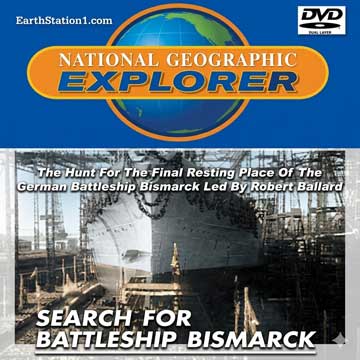
August 24, 1940: Naval History: The
History Of The Kriegsmarine: Naval Commissions: Battleships: The
German Battleship Bismarck: -- The first of two Bismarck-class
battleships built for Nazi Germany's Kriegsmarine, The Bismarck,
is commissioned. Named after Chancellor Otto von Bismarck, the
ship was laid down at the Blohm and Voss shipyard in Hamburg in
July 1936 and launched in February 1939. Work was completed in
August 1940, when she was commissioned into the German fleet.
Bismarck and her sister ship Tirpitz were the largest battleships
ever built by Germany, and two of the largest built by any
European power. On May 27, 1941, German battleship Bismarck is
sunk in the North Atlantic killing almost 2,100 men. During the
Battle Of The Denmark Strait two days prior, the iconic
battlecruiser HMS Hood initially engaged Prinz Eugen, probably by
mistake, while HMS Prince Of Wales engaged Bismarck. In the
ensuing battle Hood was destroyed by the combined fire of Bismarck
and Prinz Eugen, who then damaged Prince Of Wales and forced her
retreat. Bismarck suffered sufficient damage from three hits to
force an end to the raiding mission. The destruction of Hood
spurred a relentless pursuit by the Royal Navy involving dozens of
warships. Two days later, heading for occupied France to effect
repairs, Bismarck was attacked by 16 obsolescent Fairey Swordfish
biplane torpedo bombers from the aircraft carrier HMS Ark Royal;
one scored a hit that rendered the battleship's steering gear
inoperable. In her final battle the following morning, the
already-crippled Bismarck was severely damaged during a sustained
engagement with two British battleships and two heavy cruisers,
was scuttled by her crew, and sank with heavy loss of life. Most
experts agree that the battle damage would have caused her to sink
eventually. The wreck was located in June 1989 by Robert Ballard,
and has since been further surveyed by several other expeditions.
On Sale Until Midnight Tonight PT!
https://store.earthstation1.com/search-for-battleship-bismarck-robert-ballard-dvd-mp4-usb-driv4.html
August 24-27, 410: Rome: Ancient Rome:
The Western Roman Empire: The Fall Of The Western Roman Empire
(The Fall Of The Roman Empire, The Fall Of Rome): Sacks Of Rome:
The Sack Of Rome (410) (August 24-27, 410): -- The Visigoths under
King Alaric I begin to pillage Rome. At that time, Rome was no
longer the capital of the Western Roman Empire, having been
replaced in that position first by Mediolanum (modern Milan) in
286 and then by Ravenna in 402. Nevertheless, the city of Rome
retained a paramount position as "the eternal city" and
a spiritual center of the Empire. The sack was a major shock to
contemporaries, friends and foes of the Empire alike. This was the
first time in almost 800 years that Rome had fallen to a foreign
enemy. The previous Sack Of Rome had been accomplished by the
Gauls under their leader Brennus in 390 or 387/6 BC. The sacking
of 410 is seen as a major landmark in the fall of the Western
Roman Empire. St. Jerome, living in Bethlehem at the time, wrote;
"the city which had taken the whole world was itself taken."
On Sale Until Midnight Tonight PT!
https://store.earthstation1.com/the-world-a-television-history-4-dual-layer-dvds-all-26-sh426.html
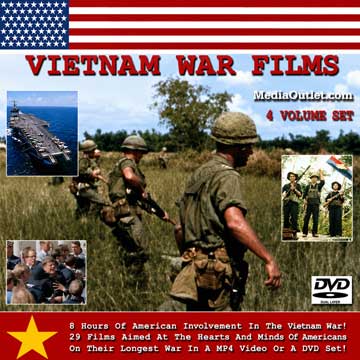
August 24, 1965: The Aftermath Of World
War II: The Cold War: The Cold War In Asia: The Indochina Wars:
The Vietnam War (The Second Indochina War, The Vietnam Conflict,
The Resistance War Against America): The United States In The
Vietnam War: The Escalation Of The Vietnam War: Operation Starlite
(The Battle Of Van Tuong): -- The first major American ground
battle of the war, which had begun on August 18 with the United
States Marines destroying a Viet Cong stronghold on the Van Tuong
peninsula, concludes as VC organized resistance ceases.Operation
Starlite (also known in Vietnam as Battle of Van Tuong) was the
first major offensive regimental size action conducted by a purely
U.S. military unit during the Vietnam War. The operation was
launched based on intelligence provided by Major General Nguyen
Chanh Thi, the Army of the Republic of Vietnam (ARVN) commander in
northern I Corps area. Lieutenant General Lewis W. Walt devised a
plan to launch a pre-emptive strike against the Viet Cong (VC) 1st
Regiment to nullify the threat on the vital Chu Lai Air Base and
Base Area and ensure its powerful communication tower remained
intact. The operation was conducted as a combined arms assault
involving ground, air and naval units. U.S. Marines were deployed
by helicopter insertion into the designated landing zone while an
amphibious landing was used to deploy other Marines. On Sale Until
Midnight Tonight PT!
https://store.earthstation1.com/vietnam-war-films-2-dual-layer--dvd-se2.html

August 23, 1990: The Aftermath Of World
War II: The Cold War: The Cold War (1985-1991) (The End Of The
Cold War): The Dissolution Of The Soviet Union: The Revolutions Of
1989 (The Fall Of Nations, The Autumn Of Nations, The Fall Of
Communism): The Eastern Bloc (The Communist Bloc, The Socialist
Bloc, The Soviet Bloc): The Eastern Bloc (The Communist Bloc, The
Socialist Bloc, The Soviet Bloc): German Reunification (German:
Deutsche Wiedervereinigung): -- West and East Germany announce
that they will reunite on October 3, 1990, on which date the
"Unification Treaty" entered into force and dissolved
the German Democratic Republic (GDR; German: Deutsche
Demokratische Republik, DDR, or East Germany) while integrating
its recently re-established constituent federated states into the
Federal Republic of Germany (FRG; German: Bundesrepublik
Deutschland, BRD, or West Germany) to form present-day Germany.
This date has been chosen as the customary German Unity Day (Tag
Der Deutschen Einheit), and has thereafter been celebrated each
year as a national holiday in Germany since 1991. As part of the
reunification, East and West Berlin were also de facto united into
a single city, which eventually became the capital of Germany.
German Reunification was the process of re-establishing Germany as
a single full sovereign state that took place between November 9,
1989 and March 15, 1991. The East German government dominated by
the Socialist Unity Party of Germany (SED) (a communist party)
started to falter on May 2, 1989, when the removal of Hungary's
border fence with Austria opened a hole in the Iron Curtain. The
border was still closely guarded, but the Pan-European Picnic and
the indecisive reaction of the rulers of the Eastern Bloc set in
motion an irreversible movement. It allowed an exodus of thousands
of East Germans fleeing to West Germany via Hungary. The Peaceful
Revolution, a part of the international Revolutions of 1989
including a series of protests by the East German citizens, led to
the fall of the Berlin Wall on November 9, 1989 and GDR's first
free elections later on March 18, 1990 and then to the
negotiations between the two countries that culminated in a
Unification Treaty. Other negotiations between the two Germanies
and the four occupying powers in Germany produced the so-called
"Two Plus Four Treaty" (Treaty On The Final Settlement
With Respect To Germany), granting on March 15, 1991 full
sovereignty to a reunified German state, whose two parts were
previously bound by a number of limitations stemming from their
post-World War II status as occupation zones, though only on
August 31, 1994 did the last Russian occupation troops leave
Germany. After the end of World War II in Europe, the old German
Reich was abolished and Germany was divided by the four Allied
countries. There was no peace treaty. Two countries emerged. The
American, British, and French zones combined to form the FRG,
i.e., West Germany on May 23, 1949. The GDR, i.e., East Germany
was established October 1949. The West German state joined NATO in
1955. In 1990, a range of opinions continued to be maintained over
whether a reunited Germany could be said to represent "Germany
as a whole" for this purpose. In the context of the
successful and international Revolutions of 1989 against the
communist states, including the GDR; on September 12, 1990, under
the Two Plus Four Treaty with the four Allies, both East and West
Germany committed to the principle that their joint pre-1990
boundary constituted the entire territory that could be claimed by
a government of Germany, and hence that there were no further
lands outside this boundary that were parts of Germany as a whole
occupied. East Germany re-established the federated states on its
soil and subsequently dissolved itself on October 3, 1990; also on
the same day, modern Germany was formed when the new states joined
the FRG while East and West Berlin were united into a single city.
The reunited state is not a successor state, but an enlarged
continuation of the 1949-1990 West German state. The enlarged
Federal Republic of Germany retained the West German seats in the
governing bodies of the European Economic Community (EC) (later
the European Union/EU) and in international organizations
including the North Atlantic Treaty Organization (NATO) and the
United Nations (UN), while relinquishing membership in the Warsaw
Pact (WP) and other international organizations to which East
Germany belonged. On Sale Until Midnight Tonight PT!
https://store.earthstation1.com/the-gulf-crisis-the-road-to-war-tv-documentary-series-dvd-mp4-us4.html

August 24-25, 1942: World War II: The
Pacific War (The Asia-Pacific War, The Pacific Theater Of World
War II): The Pacific Ocean Theater Of World War II: Operation
Cartwheel: The Solomon Islands Campaign: The Battle Of Guadalcanal
(The Guadalcanal Campaign, Operation Watchtower): The Battle Of
The Eastern Solomons (The Battle Of The Stewart Islands, Japanese:
The Second Battle Of The Solomon Sea): -- The Japanese aircraft
carrier Ryujo is sunk, with the loss of 7 officers and 113
crewmen. The US carrier USS Enterprise is heavily damaged. The
Battle Of The Eastern Solomons was the third carrier battle of the
Pacific campaign of World War II and the second major engagement
fought between the United States Navy and the Imperial Japanese
Navy during the Guadalcanal Campaign. As at the Battle Of The
Coral Sea and the Battle of Midway, the ships of the two
adversaries were never within sight of each other. Instead, all
attacks were carried out by carrier-based or land-based aircraft.
After several damaging air attacks, the naval surface combatants
from both America and Japan withdrew from the battle area.
Although neither side secured a clear victory, the U.S. and its
allies gained a tactical and strategic advantage. Japan's losses
were greater and included dozens of aircraft and their experienced
aircrews. Also, Japanese reinforcements intended for Guadalcanal
were delayed and eventually delivered by warships rather than
transport ships, giving the Allies more time to prepare for the
Japanese counteroffensive and preventing the Japanese from landing
heavy artillery, ammunition, and other supplies. On Sale Until
Midnight Tonight PT!
https://store.earthstation1.com/carriers-complete-14-part-tv-series-4-dvd-144.html
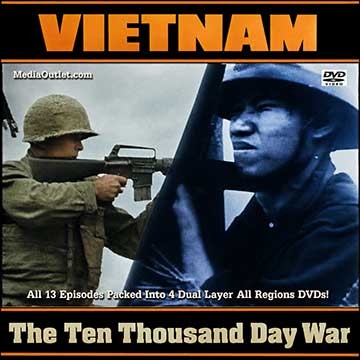
August 24, 1963: The Aftermath Of World
War II: The Cold War: The Cold War In Asia: The Indochina Wars:
The Vietnam War (The Second Indochina War, The Vietnam Conflict,
The Resistance War Against America): The United States In The
Vietnam War: Protests In Vietnam: The Buddhist Crisis
(May-November, 1963) (Vietnamese: Bien Co Phat Giao): The Xa Loi
Pagoda Raids (Vietnamese Pronunciation: SAH-loy): The 1963 South
Vietnamese Coup: -- As a result of the Kennedy administrations
outrage at the Xa Loi Pagoda raids, the US State Department, who
had been aware of the coup planning against the Diem regime, sends
Cable 243 to US Ambassador to South Vietnam Henry Cabot Lodge,
Jr., stating that it was US policy not to try to stop it. Lucien
Conein, the Central Intelligence Agencys liaison between the US
embassy and the coup planners, told the planners that if President
Diem did not remove from power his brother, Ngo Dinh Nhu, who had
led the pagoda raids, the US would not intervene to stop the coup.
On August 21, 1963, The Army of the Republic of Vietnam Special
Forces loyal to Ngo Dinh Nhu, brother of President Ngo Dinh Diem,
vandalized Buddhist pagodas across the country, arresting
thousands and leaving an estimated hundreds dead. The Xa Loi
Pagoda raids were a series of synchronized attacks on various
Buddhist pagodas in the major cities of South Vietnam shortly
after midnight on 21 August 1963. The raids were executed by the
Army of the Republic of Vietnam Special Forces under Colonel Le
Quang Tung, and combat police, both of which took their orders
directly from Ngo Dinh Nhu, younger brother of the Roman Catholic
President Ngo Dinh Diem. Xa Loi Pagoda, the largest pagoda in the
South Vietnamese capital, Saigon, was the most prominent of the
raided temples. Over 1,400 Buddhists were arrested, and estimates
of the death toll and missing ranged up to the hundreds. In
response to the Hue Vesak shootings and a ban on the Buddhist flag
in early May, South Vietnam's Buddhist majority rose in widespread
civil disobedience and protest against the religious bias and
discrimination of the Catholic-dominated Diem government. Buddhist
temples in major cities, most prominently the Xa Loi pagoda,
became focal points for protesters and assembly points for
Buddhist monks from rural areas. In August, several Army of the
Republic of Vietnam (ARVN) generals proposed the imposition of
martial law, ostensibly to break up the demonstrations, but in
reality to prepare for a military coup. However, Nhu, already
looking to arrest Buddhist leaders and crush the protest movement,
used the opportunity to preempt the generals and embarrass them.
He disguised Tung's Special Forces in army uniforms and used them
to attack the Buddhists, thereby causing the general public and
South Vietnam's U.S. allies to blame the army, diminishing the
generals' reputations and ability to act as future national
leaders. Soon after midnight on 21 August, Nhu's men attacked the
pagodas using automatic firearms, grenades, battering rams and
explosives, causing widespread damage. Some religious objects were
destroyed, including a statue of Gautama Buddha in the Tu Dam
Pagoda in Hue, which was partially leveled by explosives. Temples
were looted and vandalized, with the remains of venerated monks
confiscated. In Hue, violent street battles erupted between
government forces and rioting pro-Buddhist, anti-government
civilians. Initially, the Ngo family claimed that the army had
carried out the raids, something their U.S. allies initially
believed. However, this was later debunked, and the incident
prompted the United States to turn against the regime and begin
exploring alternative leadership options, eventually leading to
Diem's overthrow in a coup. In South Vietnam itself, the raids
stoked widespread anger. Several high-ranking public servants
resigned, and university and high school students boycotted
classes and staged riotous demonstrations, resulting in further
mass incarcerations. As most of the students were from
middle-class public service and military families, the arrests
caused further upset among the Ngo family's power base. On Sale
Until Midnight Tonight PT!
https://store.earthstation1.com/vietnam-the-10000-day-war-4-dual-layer-dvds-all-13-10000413.html
August 24, 1970: The Aftermath Of World
War II: The Cold War: The Cold War In Asia: The Indochina Wars:
The Vietnam War (The Second Indochina War, The Vietnam Conflict,
The Resistance War Against America): The United States In The
Vietnam War: Opposition To United States Involvement In The
Vietnam War: The Sterling Hall Bombing: -- #DOTD: #RIP: Four men
commit The Sterling Hall Bombing on the campus of The University
Of Wisconsin-Madison as a protest against the university's
research connections with the U.S. military during the Vietnam
War. It resulted in the death of a university physics researcher
and injuries to three others. Sterling Hall is a centrally located
building on the University of Wisconsin-Madison campus. The bomb,
set off at 3:42 am on August 24, 1970, was intended to destroy the
Army Mathematics Research Center (AMRC) housed on the 2nd, 3rd,
and 4th floors of the building. It caused massive destruction to
other parts of the building and nearby buildings as well. It
resulted in the death of the researcher Robert Fassnacht, injured
three others and caused significant destruction to the physics
department and its equipment. Neither Fassnacht nor the physics
department itself was involved with or employed by the Army
Mathematics Research Center. The bombers used a Ford Econoline van
stolen from a University of Wisconsin professor of Computer
Sciences. It was filled with close to 2,000 pounds (910 kg) of
ANFO (i.e., ammonium nitrate and fuel oil). Pieces of the van were
found on top of an eight-story building three blocks away and 26
nearby buildings were damaged; however, the targeted AMRC was
scarcely damaged. Total damage to University of Wisconsin-Madison
property was over 2.1M USD (13M in 2021) as a result of the
bombing. During the Vietnam War, the 2nd, 3rd and 4th floors of
the southern (east-west) wing of Sterling Hall housed the Army
Mathematics Research Center (AMRC). This was an Army-funded think
tank, directed by J. Barkley Rosser, Sr. The staff at the center,
at the time of the bombing, consisted of about 45 mathematicians,
about 30 of them full-time. Rosser was well known for his research
in pure mathematics, logic (Rosser's trick, the Kleene-Rosser
paradox, and the Church-Rosser theorem) and in number theory
(Rosser sieve). Rosser had been the head of the U.S. ballistics
program during World War II and also had contributed to research
on several missiles used by the U.S. military. The money to build
a home for AMRC came from the Wisconsin Alumni Research Foundation
(WARF) in 1955. Their money built a 6-floor addition to Sterling
Hall. In the contract to work at the facility, it was required
that mathematicians spend at least half their time on U.S. Army
research. Rosser publicly minimized any military role of the
center and implied that AMRC pursued mathematics, including both
pure and applied mathematics. The University of Wisconsin student
newspaper, The Daily Cardinal, obtained and published quarterly
reports that AMRC submitted to the Army. The Cardinal published a
series of investigative articles making a convincing case that
AMRC was pursuing research that was directly pursuant to specific
U.S. Department of Defense requests, and relevant to
counterinsurgency operations in Vietnam. AMRC became a magnet for
demonstrations, in which protesters chanted "U.S. out of
Vietnam! Smash Army Math!" The Army Mathematics Research
Center was phased out by the Department of Defense at the end of
the 1970 fiscal year. The bombers were Karleton "Karl"
Armstrong, Dwight Armstrong, David Fine, and Leo Burt. They called
themselves the "New Year's Gang", a name which was
derived from an exploit on New Year's Eve 1969. In that earlier
attack, Dwight and Karl, with Karl's girlfriend, Lynn Schultz (who
drove the getaway car), stole a small plane from Morey Field in
Middleton. Dwight and Karl dropped homemade explosives on the
Badger Army Ammunition Plant, but the explosives failed to
detonate. They successfully landed the plane at another airport
and escaped. Before the Sterling Hall bombing, Karl had committed
several other acts with anti-war sentiments, including setting
fire to a ROTC installation at the University of Wisconsin Armory
and Gymnasium (the Red Gym) and one meant for the state Selective
Service headquarters which instead held the University of
Wisconsin Primate Research Center. Karl also attempted to plant
explosives at a Prairie du Sac electrical substation that supplied
power to the ammunition plant, but was frightened off by the night
watchman. Robert Fassnacht was a 33-year-old postdoctoral
researcher at the University of Wisconsin-Madison. On the night
and early morning of August 23/24, 1970, he had gone to the lab to
finish up work before leaving on a family vacation. He was
involved in research in the field of superconductivity. At the
time of the explosion, Fassnacht was in his lab located in the
basement level of Sterling Hall. He was monitoring an experiment
when the explosion occurred. Rescuers found him face down in about
a foot of water. He was survived by his wife, Stephanie, and their
three children, a three-year-old son, Christopher, and twin
one-year-old daughters, Heidi and Karin. Injured in the bombing
were Paul Quin, David Schuster, and Norbert Sutler. Schuster, a
South African graduate student, who became deaf in one ear and
with only partial hearing in the other ear, was the most seriously
injured of the three, suffering a broken shoulder, fractured ribs
and a broken eardrum; he was buried in the rubble for three hours
before being rescued by firefighters. Quin, a postdoctoral physics
researcher, and Sutler, a university security officer, suffered
cuts from shattered glass and bruises. Quin, who became a physics
professor at U. W. Madison, always refused to discuss the bombing
in public. On September 22, 1970, one month after the Sterling
Hall Bombing, in reponse to a string of campus bombings,
particularly that of the Sterling Hall Bombing, President Richard
Nixon requested that 1,000 additional FBI agents be hired to
infiltrate college campuses as part of the FBI's COINTELPRO
program, a series of covert and illegal projects conducted by the
FBI aimed at surveilling, infiltrating, discrediting, and
disrupting domestic American political organizations. On Sale
Until Midnight Tonight PT!
https://store.earthstation1.com/dominoes-us-life-during-vietnam-war-set-to-rock-music-video.html
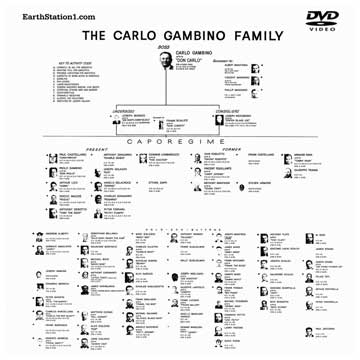
August 24, 1902: #BOTD: Carlo Gambino,
also known as Don Carlo, Italian-American mob boss (d. October 15,
1976) is #born in Palermo, Sicily, Italy to a family that belonged
to a Sicilian Mafia gang from Passo di Rigano. Carlo Gambino was a
Sicilian-American mobster and former boss of the Gambino crime
family, which is still named after him. After the Apalachin
Meeting in 1957, and the imprisonment of Vito Genovese in 1959,
Gambino took over the Commission of the American Mafia until his
death. During more than 50 years in organized crime, he served
only 22 months in prison for a tax evasion charge in 1937. Gambino
was known for being low-key and secretive. Carlo Gambino died of a
heart attack at his home in Massapequa in the early morning hours
of a Friday, aged 74. He is buried at Saint John Cemetery And
Mausoleum in Middle Village, Queens County, New York. On Sale
Until Midnight Tonight PT!
https://store.earthstation1.com/gacrfaammado.html
August 24, 1991: The Aftermath Of World
War II: The Cold War: The Cold War (1985-1991) (The End Of The
Cold War): The Dissolution Of The Soviet Union: The Revolutions Of
1989 (The Fall Of Nations, The Autumn Of Nations, The Fall Of
Communism): The Eastern Bloc (The Communist Bloc, The Socialist
Bloc, The Soviet Bloc): Russia: The History Of Russia: The 1991
Soviet Coup D'Etat Attempt (Russian: Popytka Sovetskogo
Gosudarstvennogo Perevorota 1991 Goda) (The 1991 Soviet Coup
[Russian: Sovetskiy Perevorot 1991 Goda], The August Coup
[Avgustovskiy Perevorot], The Kremlin Coup [Kremlevskiy
Perevorot]): -- Mikhail Gorbachev resigns as head of the Communist
Party of the Soviet Union. For all intents and purposes, the coup
destroyed Gorbachev politically. On August 24, he advised the
Central Committee to dissolve, resigned as general secretary and
dissolved all party units within the government. Shortly
afterward, the Supreme Soviet suspended all Party activities on
Soviet territory. In effect, Communist rule in the Soviet Union
had ended. On Sale Until Midnight Tonight PT!
https://store.earthstation1.com/gorbachev-the-rise-and-fall-dvd-mp4-usb-flash-driv4.html

August 24, 1941: The Interwar Period (The
Interbellum, Between The Wars): The Road To War: Nazi Germany (The
German Reich, The Third Reich): Nazi Eugenics ("Racial
Hygiene"): Aktion T4 (German: "Action T4"): --
Adolf Hitler publicly orders the cessation of Nazi Germany's
systematic T4 euthanasia program of the mentally ill and the
handicapped due to protests, although actually killings continue
for the remainder of the war. Aktion T4 is a postwar name for mass
murder through involuntary euthanasia in Nazi Germany. The name T4
is an abbreviation of Tiergartenstrasse 4, a street address of the
Chancellery department set up in the spring of 1940, in the Berlin
borough of Tiergarten, which recruited and paid personnel
associated with T4. Certain German physicians were authorized to
select patients "deemed incurably sick, after most critical
medical examination" and then administer to them a "mercy
death" (Gnadentod). In October 1939 Adolf Hitler signed a
"euthanasia note" backdated to 1 September 1939, that
authorized his physician Karl Brandt and Reichsleiter Philipp
Bouhler to implement the programme. The killings took place from
September 1939 until the end of the war in 1945, during which
275,000 to 300,000 people were killed at various extermination
centres at psychiatric hospitals in Germany and Austria, along
with those in occupied Poland and the Protectorate of Bohemia and
Moravia (now the Czech Republic). The number of victims was
originally recorded as 70,273 people but this number has been
increased by the discovery of victims listed in the archives of
former East Germany. About half of those killed were taken from
church-run asylums, often with the approval of the Protestant or
Catholic authorities of the institutions. Despite the Holy See
announcing on 2 December 1940 that the policy was contrary to the
natural and positive Divine law and that "The direct killing
of an innocent person because of mental or physical defects is not
allowed", the declaration was not upheld by some Catholic
authorities in Germany. In the summer of 1941, protests were led
in Germany by Bishop von Galen, whose intervention, according to
Richard J. Evans, led to "the strongest, most explicit and
most widespread protest movement against any policy since the
beginning of the Third Reich". Several reasons for the
programme have been offered, including eugenics, compassion,
reducing suffering, racial hygiene, economy and pressure on the
welfare budget. After the nominal end of the programme, physicians
in German and Austrian facilities continued many of the practices
of Aktion T4, until the defeat of Germany in 1945. The unofficial
continuation of the policy led to additional deaths by medicine
and similar means, resulting in 93,521 beds "emptied" by
the end of 1941. Technology that was developed under Aktion T4,
particularly the use of lethal gas to kill large numbers of
people, was taken over by the medical division of the Reich
Interior Ministry, along with personnel who had participated in
the development of the technology and later participated in
Operation Reinhard. The technology, personnel and techniques
developed were instrumental in the implementation of Nazi
genocides. Although the programme was authorized by Hitler, the
killings have since come to be viewed as murders in Germany. The
number killed was about 200,000 in Germany and Austria, while in
other European countries about 100,000 persons were also victims.
On Sale Until Midnight Tonight PT!
https://store.earthstation1.com/selling-murder-the-killing-films-of-the-third-reich-dvd-mp4-us4.html
August 24, 1934: #BOTD: #HBD! Kenny
Baker, English actor and musician, best known for portraying the
character R2-D2 in the Star Wars science fiction movie franchise
(d. August 13, 2016) is #born Kenneth George Baker in Birmingham,
Warwickshire, West Midlands, England. Although his parents were of
average height, Baker stood 3 ft 8 in (1.12 m) as an adult. In
1951 Baker was approached on the street by a woman who invited him
to join a theatrical troupe of dwarves and midgets. This was his
first taste of show business. Later, he joined a circus for a
brief time, learned to ice skate and appeared in many ice shows.
He formed a successful comedy act called the Minitones with
entertainer Jack Purvis and played in nightclubs. While working
with Purvis and the Minitones, Baker was selected by George Lucas
to operate the robot ("droid") R2-D2 in the science
fiction feature film Star Wars, released in 1977. Baker recalled
that he initially turned down the role. Baker appears as R2-D2 in
six of the episodic theatrical Star Wars films, and played an
additional role in 1983's Return of the Jedi as Paploo, the Ewok
who steals an Imperial speeder bike. He revealed a feud between
him and his co-star Anthony Daniels, who played C-3PO, claiming
Daniels had been rude to him on numerous occasions, and stated
that Daniels is rude to everyone, including fans. Baker's other
films include The Elephant Man, Time Bandits (also with Jack
Purvis), Willow (also with Purvis and Warwick Davis), Flash
Gordon, Amadeus and Jim Henson's Labyrinth. On television, he
appeared in the British medical drama Casualty. He also had a part
in the BBC production of The Chronicles of Narnia. In the late
1990s, Baker launched a brief comedy career. He played Casanova in
the 1993 movie UFO. Baker resided in Preston, Lancashire. He was
married to actress Eileen Baker (who co-starred with him in the
1977 film Wombling Free) from 1970 until she died in 1993.
Although Eileen also had dwarfism, this was not inherited by their
two children. Baker was invited to attend the premiere of Star
Wars: The Force Awakens in Los Angeles in December 2015, but was
too ill to travel to the US. He had been suffering from a lung
condition for years. Instead, Baker attended the film's premiere
in London. Baker died eleven days before his 82nd birthday,
following a brief undisclosed additional illness. He is buried at
Lytham Park Cemetery And Crematorium in Lytham Saint Annes, Fylde
Borough, Lancashire, England. Following the death of the actor it
was revealed by The Sun that he had fathered a son who had been
kept secret from his family and that they had contacted each other
on a number of occasions. On Sale Until Midnight Tonight PT!
https://store.earthstation1.com/from-star-wars-to-jedi-the-making-of-a-saga-dvd.html
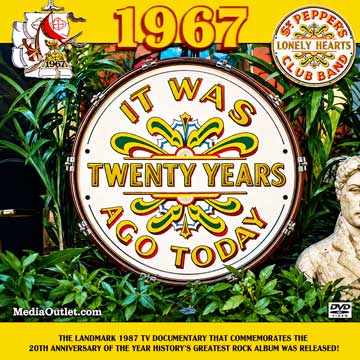
August 24, 1967: Counterculture Of The
1960s: The Hippie Movement: Counterculture Festivals: Happenings:
The 1967 New York Stock Exchange Happening: -- Led by Abbie
Hoffman, James Fourrat and Jerry Rubin, the Youth International
Party temporarily disrupts trading at the New York Stock Exchange
by throwing dollar bills from the viewing gallery, causing trading
to cease as brokers scramble to grab them. It remains perhaps the
most striking act of guerrilla theater in American history,
certainly in the financial world. On a steamy summer morning forty
years ago, about a dozen young men and women led by James Fourrat
and Abbie Hoffman entered the visitors' entrance to the New York
Stock Exchange at 20 Broad Street. (The trading floor gallery had
been open to visitors since 1939.) They waited while a member of
the security staff approached; the group had previously phoned the
exchange and asked for a tour, but the guards became nervous about
the way that some in the group were dressed. Still, the group went
up to the visitors' gallery, two stories above the busy trading
floor. They snaked their way past exhibits showing the virtues of
the industrial revolution and the development of modern
capitalism. As they turned the corner, they encountered a horde of
reporters and cameras. This made exchange officials nervous. John
Whighton, the captain of the exchange's security force, told the
group that no demonstration of any kind would be tolerated.
Whighton asked the group for a name, and Fourrat said: "George
Metesky," and identified his group as ESSO, the East Side
Service Organization (the first a reference to New York's "Mad
Bomber", an American electrician and mechanic who terrorized
New York City for 16 years in the 1940s and 1950s with explosives
that he planted in theaters, terminals, libraries, and offices;
the second to the successor to Rockefeller's Standard Oil). The
guard wrote "George Metesky and friends" on a pad, and
escorted the group up to the railing directly above the trading
floor. Immediately, the group of pranksters began throwing
handfuls of one-dollar bills over the railing, laughing the entire
time. (The exact number of bills is a matter of dispute; Hoffman
later wrote that it was 300, while others said no more than 30 or
40 were thrown.) Some of the brokers, clerks and stock runners
below laughed and waved; others jeered angrily and shook their
fists. Participant Bruce Dancis recalled, "At first people on
the floor were stunned. They didn't know what was happening. They
looked up and when they saw money was being thrown they started to
cheer, and there was a big scramble for the dollars." The
bills barely had time to land on the ground before guards began
removing the group from the building, but news photos had been
taken and the Stock Exchange "happening" quickly slid
into iconic status. Once outside, the activists formed a circle,
holding hands and chanting "Free! Free!" At one point,
Hoffman stood in the center of the circle and lit the edge of a 5
USD bill while grinning madly, but an NYSE runner grabbed it from
him, stamped on it, and said: "You're disgusting." If
the prank accomplished nothing else, it helped cement Hoffman's
reputation as one of America's most outlandish and creative
protestors. Along with Jerry Rubin and others, Hoffman had founded
the Youth International Party earlier that year, and the "Yippie"
movement quickly became a prominent part of America's
counterculture. Hoffman would later boast of his NYSE exploit: "In
the minds of millions of teenagers the stock market had just
crashed." Although Hoffman was speaking largely of a symbolic
crash, the Dow Jones industrial average did in fact finish that
week down 24.97 points, at 894.07. And in 1967 the market began
one of the most sustained bear periods in its history. Of course,
no one would attribute that bear market directly to the Yippies'
intervention. The U.S. economy began to suffer under the weight of
spending on the Vietnam War and Great Society programs, and the
stock market's lackluster performance reflected that economic
stagnation. The event did appear to have one direct effect:
officials moved to insure that nothing like it could occur again.
Some three months later, the NYSE installed bulletproof glass
panels, 1-3/16 inches thick, around the visitors' gallery, as well
as a metal grillwork ceiling. An exchange spokesman told the New
York Times at the time that it was for "reasons of security."
On Sale Until Midnight Tonight PT!
https://store.earthstation1.com/it-was-20-years-ago-today-1967-and-sgt-pepp201967.html
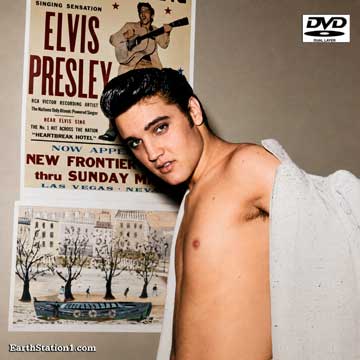
August 24, 1905: #BOTD: #HBD! Arthur
Crudup, also known as Big Boy Crudup, American Delta blues singer,
songwriter and guitarist, sometimes referred to as the "Father
Of Rock And Roll"(d. March 28, 1974) is #born Arthur William
Crudup in Forest, Mississippi, to a family of migrant workers, he
is best known, outside blues circles, for his songs "That's
All Right" (1946), "My Baby Left Me" and "So
Glad You're Mine", later recorded by Elvis Presley and other
artists. Elvis Presley acknowledged Crudup's importance to rock
and roll when he said, "If I had any ambition, it was to be
as good as Arthur Crudup"; The Blues Hall of Fame quotes
Presley as having said, "Down in Tupelo, Mississippi, I used
to hear old Arthur Crudup bang his box the way I do now, and I
said if I ever got to the place I could feel all old Arthur felt,
I'd be a music man like nobody ever saw". Big Boy Crudup
began his career as a blues singer around Clarksdale, Mississippi.
As a member of the Harmonizing Four, he visited Chicago in 1939.
He stayed in Chicago to work as a solo musician but barely made a
living as a street singer. The record producer Lester Melrose
allegedly found him while Crudup was living in a packing crate,
introduced him to Hudson Whittaker, better known as Tampa Red, and
signed him to a recording contract with RCA Victor's Bluebird
label. He recorded with RCA in the late 1940s and with Ace
Records, Checker Records and Trumpet Records in the early 1950s.
He toured black clubs in the South, sometimes playing with Sonny
Boy Williamson II and Elmore James. He also recorded under the
names Elmer James and Percy Lee Crudup. His songs "Mean Old
'Frisco Blues", "Who's Been Foolin' You" and
"That's All Right" were popular in the South. These and
his other songs "Rock Me Mama", "So Glad You're
Mine", and "My Baby Left Me" have been recorded by
many artists, including Elvis Presley, Slade, Elton John and Rod
Stewart. Crudup stopped recording in the 1950s because of disputes
over royalties. He said, "I realised I was making everybody
rich, and here I was poor". His last Chicago session was in
1951. His 1952-54 recording sessions for Victor were held at radio
station WGST, in Atlanta, Georgia. He returned to recording, for
Fire Records and Delmark Records, and touring in 1965. Sometimes
labeled "The Father of Rock and Roll", he accepted this
title with some bemusement. During this time Crudup worked as a
laborer to augment the low wages he received as a singer (he was
not receiving royalties). After a dispute with Melrose over
royalties, he returned to Mississippi and took up bootlegging. He
later moved to Virginia, where he lived with his family, including
three sons and several of his siblings, and worked as a field
laborer. He occasionally sang in and supplied moonshine to
drinking establishments, including one called the Do Drop Inn, in
Franktown, Northampton County. In 1968, the blues promoter Dick
Waterman began fighting for Crudup's royalties and reached an
agreement in which Crudup would be paid 60K USD. However, Hill and
Range Songs, from which he was supposed to get the royalties,
refused to sign the legal papers at the last minute, because the
company thought it could not lose more money in legal action. In
the early 1970s, two Virginia activists, Celia Santiago and
Margaret Carter, assisted Crudup in an attempt to gain royalties
he felt he was due, with little success. By 1971, he had collected
over 10K USD in overdue royalties through the intervention of the
Songwriters Guild of America (then called the American Guild Of
Authors And Composers). On a 1970 trip to the United Kingdom,
Crudup recorded "Roebuck Man" with local musicians. His
last professional engagements were with Bonnie Raitt. Crudup was
credited as the composer of Presley's "That's Alright, Mama",
but despite legal battles into the 1970s, reportedly never
received royalties. An out-of-court settlement was supposed to pay
Crudup an estimated 60K USD in back royalties, but never
materialized. There was some confusion about the date of death
because of his use of several names, including those of his
siblings. He died of complications of heart disease and diabetes
in the Nassawadox hospital in Northampton County, Virginia, in
March 1974. Crudup has been honored with a marker on the
Mississippi Blues Trail, placed at Forest. The Blues Hall of Fame
stated that Crudup "became known as 'The Father of Rock 'n'
Roll' after Elvis Presley recorded three of his songs" but
adds that "Crudup was a classic victim of music industry
exploitation, and despite the commercial success of his music, was
never able to even support his family from his music". Arthur
Crudup died of complications of heart disease and diabetes aged 68
in the Nassawadox hospital in Northampton County, Virginia, four
years after a protracted and failed battle for a settlement on
unpaid and overdue royalties. He is buried at Bethel Memorial
Gardens cemetery in Franktown, Virginia. On Sale Until Midnight
Tonight PT!
https://store.earthstation1.com/viva-elvis-dvd-elvis-presley-cult-documentary.html

August 24, 1915: #BOTD: #HBD! Wynonie
Harris, nicknamed ""Mr. Blues", African American
rock & roll pioneer, blues shouter, rhythm-and-blues singer
and guitarist of upbeat songs, featuring humorous, often ribald
lyrics (d. June 14, 1969) is #born in Omaha, Nebraska. He had
fifteen Top 10 hits between 1946 and 1952. Harris is attributed by
many music scholars to be one of the founding fathers of rock and
roll. His 1947 release of Roy Brown's jump blues song "Good
Rocking Tonight" (sometimes called "Good Rockin'
Tonight") is one of the contenders for the title of "first
rock'n'roll record". His dirty blues repertoire included
"Lolly Pop Mama" (1948), "I Like My Baby's Pudding"
(1950), "Sittin on It All the Time" (1950), "Keep
On Churnin' (Till the Butter Comes)" (1952), and "Wasn't
That Good" (1953). Wynonie Harris died of esophageal cancer
aged 53, at the USC Medical Center Hospital in Los Angeles. He is
buried at Woodlawn Memorial Park in Compton, Los Angeles County,
California. On Sale Until Midnight Tonight PT!
https://store.earthstation1.com/rock-amp-roll-an-unruly-history-10-part-tv-series-mp4-video-download-104.html

August 24, 1929: #BOTD: Yasser Arafat,
Palestinian engineer and politician, Chairman of the Palestine
Liberation Organization (PLO) from 1969 to 2004 and President of
the Palestinian National Authority (PNA) from 1994 to 2004, 1st
President of the Palestinian National Authority, Nobel Prize
laureate (d. November 11, 2004) is #born Mohammed Abdel Rahman
Abdel Raouf al-Qudwa al-Husseini in Cairo, Egypt. Arafat and his
family have always insisted that he was born on August 4, 1929 in
his mother's family home in Jerusalem; nevertheless, an Egyptian
birth registration exists, suggesting that he was born in Egypt on
August 24, 1929. Ideologically an Arab nationalist and a
socialist, he was a founding member of the Fatah political party,
which he led from 1959 until 2004. Arafat was born to Palestinian
parents in Cairo, Egypt, where he spent most of his youth and
studied at the University of King Fuad I. While a student, he
embraced Arab nationalist and anti-Zionist ideas. Opposed to the
1948 creation of the State of Israel, he fought alongside the
Muslim Brotherhood during the 1948 Arab-Israeli War. Following the
defeat of Arab forces, Arafat returned to Cairo and served as
president of the General Union of Palestinian Students from 1952
to 1956. In the latter part of the 1950s Arafat co-founded Fatah,
a paramilitary organization seeking the removal of Israel and its
replacement with a Palestinian state. Fatah operated within
several Arab countries, from where it launched attacks on Israeli
targets. In the latter part of the 1960s Arafat's profile grew; in
1967 he joined the Palestinian Liberation Organization (PLO) and
in 1969 was elected chair of the Palestinian National Council
(PNC). Fatah's growing presence in Jordan resulted in military
clashes with King Hussein's Jordanian government and in the early
1970s it relocated to Lebanon. There, Fatah assisted the Lebanese
National Movement during the Lebanese Civil War and continued its
attacks on Israel, resulting in it becoming a major target of
Israel's 1978 and 1982 invasions. From 1983 to 1993, Arafat based
himself in Tunisia, and began to shift his approach from open
conflict with the Israelis to negotiation. In 1988, he
acknowledged Israel's right to exist and sought a two-state
solution to the Israeli-Palestinian conflict. In 1994 he returned
to Palestine, settling in Gaza City and promoting self-governance
for the Palestinian territories. He engaged in a series of
negotiations with the Israeli government to end the conflict
between it and the PLO. These included the Madrid Conference of
1991, the 1993 Oslo Accords and the 2000 Camp David Summit. The
success of the negotiations in Oslo led to Arafat being awarded
the Nobel Peace Prize, alongside Israeli Prime Ministers Yitzhak
Rabin and Shimon Peres, in 1994. At the time, Fatah's support
among the Palestinians declined with the growth of Hamas and other
militant rivals. In late 2004, after effectively being confined
within his Ramallah compound for over two years by the Israeli
army, Arafat fell into a coma and died. While the cause of
Arafat's death has remained the subject of speculation,
investigations by Russian and French teams determined no foul play
was involved. Arafat remains a controversial figure. Palestinians
generally view him as a martyr who symbolized the national
aspirations of his people. Israelis regarded him as a terrorist.
Palestinian rivals, including Islamists and several PLO leftists,
frequently denounced him as corrupt or too submissive in his
concessions to the Israeli government. Yasser Arafat was
pronounced dead at 03:30 UTC at the age of 75 of what French
doctors called a massive hemorrhagic cerebrovascular accident
(hemorrhagic stroke); however, Arafat's medical records were
initially withheld by senior Palestinian officials, and Arafat's
wife refused an autopsy because they were Muslim. The Palestine
Liberation Organization confirmed the death of Yasser Arafat, but
did not unidentify the cause. The Palestinian people went into a
state of mourning, with Qur'anic mourning prayers emitted from
mosque loudspeakers throughout the West Bank and the Gaza Strip,
and tires burned in the streets. The Palestinian Authority and
refugee camps in Lebanon declared 40 days of mourning. Mahmoud
Abbas was elected chairman of the PLO minutes later. Yasser Arafat
is buried in a concrete mausoleum at The Muqataa, the Palestinian
Authority headquarters in Ramallah, West Bank, Palestine. On Sale
Until Midnight Tonight PT!
https://store.earthstation1.com/terror-the-israelipalestinian-conflict-dvd-mp4-video-downloa4.html

August 24, 1932: Aviation: The History Of
Aviation: The History Of Transcontinental Flight: The
Transcontinental Flight Of Amelia Earhart: -- Amelia Earhart
becomes the first woman to fly across the United States non-stop,
doing so taking off from Mines Field (now Los Angeles
International Airport) in Los Angeles, California and landing at
Newark Metropolitan Airport (now Newark Liberty International
Airport) in Newark, New Jersey. On Sale Until Midnight Tonight PT!
https://store.earthstation1.com/amelia-earhart-dvd-female-aviation-pioneer.html
 August 24, 1967: #DOTD: #RIP: Henry J.
Kaiser, American industrialist and businessman, known for his
shipbuilding and construction projects, founder of Kaiser
Shipyards and Kaiser Aluminum, pioneer of The Liberty Ships that
helped to win World War II, founder of Kaiser-Frazer and Kaiser
Motors, automobile companies known for their being designed for
safety, pioneer in the personal health care industry, television
production sponsor of "Maverick" and "Hawaiian
Eye", founder of Kaiser Broadcasting and practical genius (b.
May 9, 1882) #dies at the age of 85 in Honolulu. He is interred in
Mountain View Cemetery in the Main Mausoleum, in Oakland,
California. He was outlived by his second wife, Alyce Chester
Kaiser, who inherited half his fortune, and by his elder son,
Edgar F. Kaiser, who had been president of the Kaiser Industries
Corporation since 1956. One of Kaiser's grandsons, Edgar Kaiser
Jr., became president of Kaiser Steel from 1981 to 1984, and
briefly owned the Denver Broncos NFL franchise. Another grandson,
Henry, is the founder of Metalanguage Records, experimental
guitarist, ethnomusicologist, Antarctic diver, filmmaker and
academy award nominated film score composer. Henry J. Kaiser was
born Henry John Kaiser in Sprout Brook, New York, the son of Franz
and Anna Marie (nee Yops) Kaiser, ethnic German immigrants. Prior
to World War II, Kaiser was involved in the construction industry;
his company was one of those that built the Hoover Dam. He
established the Kaiser Shipyards, which built Liberty ships during
World War II, after which he formed Kaiser Aluminum and Kaiser
Steel. Kaiser organized Kaiser Permanente health care for his
workers and their families. Kaiser was involved in large
construction projects such as civic centers and dams, and invested
in real estate, later moving into television broadcasting. In
1957, Kaiser, convinced that television could make Kaiser brand
products known to the public, partnered with Warner Brothers and
ABC to sponsor the television series Maverick, promoting household
products including Kaiser aluminum foil and Kaiser Jeep vehicles.
In support of his Hawaii ventures, Kaiser induced Warner Brothers
to copy the formula of its popular series 77 Sunset Strip as new
TV series Hawaiian Eye. Though actually filmed at WB studios in
Burbank, California, the show featured private detectives based at
Kaiser's Hilton Hawaiian Village. (The Hilton Hawaiian Village was
featured in Hawaii 5-0 with many scenes filmed at the resort.)
Kaiser eventually bought and built a chain of radio and television
stations which became known as Kaiser Broadcasting. Some call
signs included his initials "HK", beginning in 1957 in
Honolulu with KHVH-TV 13 and KHVH AM 1040.
https://store.earthstation1.com/world-war-ii-the-war-years-17-part-tv-series-mp4-video-download-174.html
August 24, 1998: #DOTD: Charles Diggs,
known familiarly as Charlie Diggs, soldier, funeral director,
Michigan State Senator, Michigan's first Black congressman as
Representative from The State Of Michigan, Civil Rights activist,
founding member and first chairman of the Congressional Black
Caucus (b. December 2, 1922) #dies of a stroke aged 75 at Greater
Southeast Community Hospital in Washington, D.C. He is interred at
Detroit Memorial Park in Warren, Michigan. Charles Diggs was born
Charles Coles Diggs Jr. in Detroit, Michigan, the only child of
Mayme E. Jones Diggs, and Charles Diggs Sr.. He was rooted in his
family's business, the House Of Diggs, at one time was said to be
Michigan's largest funeral home, founded by his father Charles C.
Diggs, Sr. in 1921. He attended the University of Michigan,
Detroit College of Law (1952-52), and Fisk University. He served
in the United States Army from 1943 to 1945. After his discharge,
Diggs worked as a funeral director at The House Of Diggs. A member
of the Democratic Party, he served as a member of the Michigan
Senate from the 3rd district 1951-54, just as his father had from
1937 to 1944. On November 2, 1954, Charles Diggs was elected
Michigan's first Black congressman, winning in the general
election for Michigan's 13th congressional district to become its
representative in the 84th Congress, where he served from January
3, 1955 until June 3, 1980. Diggs was an early and highly visible
participant in the civil rights movement {The American Civil
Rights Movement (1954-1968)}. In September 1955, the Michigan
Representative garnered national attention when he attended the
trial of the two white Mississippians accused of murdering Emmett
Till. He was elected the first chairman of the Congressional Black
Caucus, which on January 4, 1969 he was also one of the main
founders of. While chairman, Diggs successfully led a caucus
boycott of President Nixon's State of the Union Address, following
Nixon's refusal to meet to discuss issues relevant to African
Americans. This and similar work contributed to Diggs being named
on the Master List Of Nixon Political Opponents, colloquially
known as "The Nixon Enemies List". He was a staunch and
outspoken critic of the apartheid regime in South Africa. On March
23, 1978, Diggs was indicted by a federal grand jury on 35 charges
of mail fraud and charged with taking kickbacks from staff whose
salaries he raised. He was convicted in United States of America
v. Charles C. Diggs, Jr. on October 7, 1978, on 11 counts of mail
fraud and filing false payroll forms. Diggs insisted he had done
nothing wrong, and was overwhelmingly re-elected while awaiting
sentencing. He was censured by the House on July 31, 1979, and
resigned from Congress June 3, 1980. He was sentenced to three
years in prison and served 14 months.
https://store.earthstation1.com/eyes-on-the-prize-ii-dvd-set-4-discs-complete-2nd-seri42.html
August 24, 1954: The Aftermath Of World
War II: The Cold War: The Cold War (1953-1962): Anti-Communism:
Anti-Communism In The United States: The Red Scare: The Second Red
Scare: McCarthyism (1947-1959): The Communist Control Act Of 1954:
-- Demonstrating how deeply McCarthyism had penetrated American
society, The American Communist Party is outlawed as President
Dwight Eisenhower signs into law The Communist Control Act, a
piece of United States federal legislation that criminalized
membership in, or support for, the Communist Party of the United
States or "Communist-action" organizations, and defined
evidence to be considered by a jury in determining participation
in the activities, planning, actions, objectives, or purposes of
such organizations. The Act has since been ruled unconstitutional
in federal court but has not been ruled on in the Supreme Court,
and has never been enforced.
https://store.earthstation1.com/the-second-red-scare-19471957-documentaries-mp4-video-dow194719574.html
August 24, 1987: #DOTD: #RIP: Bayard
Rustin, African American activist leader in social movements for
civil rights, socialism, nonviolence, and gay rights (b. March 17,
1912) #dies of a perforated appendix in New York City, aged 75. He
was involved at the time with a humanitarian mission to Haiti. His
remains were cremated, and the ashes buried in an unmarked spot on
an undisclosed estate in Upstate New York. An obituary in The New
York Times reported, "Looking back at his career, Mr. Rustin,
a Quaker, once wrote: 'The principal factors which influenced my
life are 1) nonviolent tactics; 2) constitutional means; 3)
democratic procedures; 4) respect for human personality; 5) a
belief that all people are one.'" President Ronald Reagan
issued a statement on Rustin's death, praising his work for civil
rights and "for human rights throughout the world". He
added that Rustin "was denounced by former friends, because
he never gave up his conviction that minorities in America could
and would succeed based on their individual merit". Rustin
was survived by Walter Naegle, his white homosexual partner of ten
years. On November 20, 2013, President Barack Obama posthumously
awarded Rustin the Presidential Medal Of Freedom. Bayard Rustin
was born in West Chester, Pennsylvania. Rustin worked with A.
Philip Randolph on the March On Washington Movement (MOWM,
1941-1946), to press for an end to racial discrimination in
employment. Rustin later organized Freedom Rides, and helped to
organize the Southern Christian Leadership Conference to
strengthen Martin Luther King Jr.'s leadership and teaching King
about nonviolence; he later served as an organizer for the March
on Washington for Jobs and Freedom. Rustin worked alongside Ella
Baker, a co-director of the Crusade for Citizenship, in 1954; and
before the Montgomery bus boycott, he helped organize a group,
called "In Friendship," amongst Baker, George Lawrence,
Stanley Levison of the American Jewish Congress, and some other
labor leaders. "In Friendship" provided material and
legal assistance to those being evicted from their tenant farms
and households in Clarendon County, Yazoo, and other places.
Rustin became the head of the AFL-CIO's A. Philip Randolph
Institute, which promoted the integration of formerly all-white
unions and promoted the unionization of African Americans. During
the 1970s and 1980s, Rustin served on many humanitarian missions,
such as aiding refugees from Vietnam and Cambodia. At the time of
his death in 1987, he was on a humanitarian mission in Haiti.
Rustin was a gay man and, due to criticism over his sexuality, he
usually acted as an influential adviser behind the scenes to
civil-rights leaders. In the 1980s, he became a public advocate on
behalf of gay causes, speaking at events as an activist and
supporter of human rights. Later in life, while still devoted to
securing workers' rights, Rustin joined other union leaders in
aligning with ideological neoconservatism. Rustin's personal
philosophy is said to have been inspired by combining Quaker
pacifism with socialism (as taught by A. Philip Randolph), and the
theory of non-violent protest popularized by Mahatma Gandhi.
https://store.earthstation1.com/black-civil-rights-films-africanamerican-history-dvd.html
August 24, 1974: #DOTD: #RIP: Alexander
P. de Seversky, Russian-American sailor, aviation pioneer,
military aviator, leading Russian naval flying ace of World War I,
Order of St. George (4th class); Order of St. Vladimir (4th
class); Order of St. Stanislaus (2nd & 3rd class); Order of
St. Anne (2nd; 3rd; and 4th class), air speed record holder,
engineer, businessman, influential advocate of strategic air
power, co-founder of Republic Aviation (b. June 7, 1894) #dies of
a respiratory ailment at Memorial Hospital in Manhattan, New York
City, aged 80. He is buried alongside his wife Evelyn Olliphant de
Seversky in the Woodlawn Cemetery in the Bronx, New York City.
Alexander P. de Seversky was born Alexander Nikolaievich Prokofiev
de Seversky in Tiflis, Russian Empire (now Tbilisi, Georgia). Of
noble Russian parentage, entered military school at age 10.
Seversky's father was one of the first Russian aviators to own an
aircraft (a modified Bleriot XI built by Mikheil Grigorashvili)
and by the age of 14, when Seversky entered the Imperial Russian
Naval Academy, his father had already taught him how to fly.
Graduating in 1914 with an engineering degree, Lieutenant Seversky
was serving at sea with a destroyer flotilla when World War I
began. Seversky was selected for duty as a naval aviator,
transferring to the Military School of Aeronautics at Sebastopol,
Crimea. After completing a postgraduate program on aeronautics in
1914-15, he was reassigned as a pilot in the summer of 1915 to an
aviation unit in the Baltic Fleet. While stationed in the Gulf of
Riga, on his first mission, he attacked a German destroyer but was
shot down by enemy anti-aircraft fire before he could drop his
bombs. The bombs exploded in the crash, killing his observer and
badly wounding Seversky. Doctors amputated his leg below the knee
and although he was fitted with an artificial leg, despite his
protests, authorities deemed him unfit to return to combat. To
prove to his superiors that he could still fly, Seversky appeared
unannounced at an air show. Following his impromptu spirited
aerial performance, authorities arrested him. Tsar Nicholas II
himself intervened on his behalf and in July 1916, de Seversky
returned to combat duty, downing his first enemy aircraft three
days later. In February 1917, he assumed command of the 2nd Naval
Fighter Detachment, until he was seriously injured in an accident
where a horse-drawn wagon broke his good leg. After serving in
Moscow, as the Chief of Pursuit Aviation, Seversky returned to
combat duty. On October 14, 1916, he was forced down in enemy
territory but made it back to the safety of his own lines. He went
on to fly 57 combat missions, shooting down six German aircraft
(his claims for 13 victories would make him Russia's third-ranking
World War I ace, although the claims are disputed). During the
1917 Russian Revolution, Seversky was stationed in St. Petersburg
and remained in uniform at the request of the commander-in-chief
of the Baltic Fleet. In March 1918, he was selected as an
assistant naval attache in the Russian Naval Aviation Mission to
the United States. Seversky departed via Siberia, and while in the
U.S., decided to remain there rather than return to a Soviet
Russia torn apart by the Revolution. Settling in Manhattan, he
briefly operated a restaurant. In 1918, Seversky offered his
services to the War Department as a pilot. General William Kenly,
Chief of the Signal Corps, appointed him as a consulting engineer
and test pilot assigned to the Buffalo District of aircraft
production. After the Armistice, Seversky became an assistant to
air power advocate General Billy Mitchell, aiding him in his push
to prove air power's ability to sink battleships. Seversky applied
for and received the first patent for air-to-air refueling in
1921. Over the next few years, 364 patent claims were made, among
them the first gyroscopically stabilized bombsight, which Seversky
developed with Sperry Gyroscope Company in 1923. After joining the
Army Air Corps Reserve, Seversky was commissioned a major in 1928.
Using the $50,000 from the sale of his bombsight to the U. S.
Government, Seversky founded the Seversky Aero Corporation in
1923. Concentrating on making aircraft parts and instruments, the
small company was unable to survive the stock market crash of
1929. On February 16, 1931, with the backing of Wall Street
millionaire Edward Moore and other investors, he resurrected the
enterprise as the new Seversky Aircraft Corporation in Long
Island, New York. Moving into the former EDO Aircraft
Corporation's float plane factory at College Point, Long Island,
Seversky's patents were the primary assets of the new company.
Resolved to invest in research and design rather than relying on
licence-manufacturing, many of Seversky Aircraft's designers were
Russian and Georgian engineers, including Chief Engineer Michael
Gregor and Alexander Kartveli. Along with Seversky, the designers
embarked on an advanced all-metal, multi-place monoplane
amphibian, the SEV-3. This ground-breaking design would go on to
set numerous speed records at the 1933-1939 National Air Races,
often piloted by Seversky himself, who was the company's greatest
"pitchman". On September 15, 1935, flying at a speed
just over 230 mph, Seversky set a world speed record for
piston-engine amphibious aircraft. Seversky also set a
transcontinental speed record in 1938. The SEV-3 was eventually
the progenitor of a family of advanced aircraft including the
SEV-3XLR and 2-XP (two-place, experimental) fighter, the BT-8
trainer and SEV-1P (single-seat) fighter. The most radical
conversion occurred when the fixed-gear SEV-1P was fitted with a
rearward retracting main undercarriage to produce the prototype of
the successful P-35A fighter series, the first single-seat fighter
in United States Army Air Corps to feature all-metal construction,
retractable landing gear, and an enclosed cockpit. The Seversky
Aircraft design office led by Seversky was responsible for 25
different innovative projects, many of them "still-born"
including the "Seversky Super-Clipper", an eight-engine,
250 ft span transoceanic transport and the four-place, tricycle
gear "Seversky Executive" high speed personal aircraft.
The Sev-S2, virtually identical to the P-35, which was undergoing
trials in 1937, dominated the last three Bendix Trophy air races,
beginning in 1937 when Frank Fuller won at an average speed of
415.51 km/h. The Seversky Aircraft Company began operating out of
new facilities in Long Island in 1936, purchasing three factories,
a flying field and hangar along with a seaplane assembly base at
Famingdale and Amityville, Long Island. Despite landing several
government contracts, Seversky Aircraft was never able to turn a
profit under Seversky's management. By September 1938, the company
had to be bailed out again by Paul Moore (Edward's brother and
heir). His financing of a rescue came with the proviso that
Seversky, as President, would have his personal budget cut, while
the board of directors transferred more power to managing director
Wallace Kellett. A controversial contract Seversky negotiated in
secret with the Japanese for 20 SEV-2PA-B3 fighters created
antagonism with the War Department, leading inevitably to the U.S.
government putting pressure on the USAAC to limit the P-35 order
to the initial batch of 76 aircraft. With the controversies of his
management record, his financial issues and secret dealings with
an Imperial Japan that the War Department considered a potential
military adversary, Seversky was removed as president while on a
European sales tour by the company's board of directors on October
13, 1939, who replaced Seversky with Kellett as president of the
company, reorganized the company, and renamed the company Republic
Aviation Corporation. Seversky sued for redress but while legal
actions dragged on, the board of directors voted him out of the
company he had created. Republic Aviation would become an
industrial behemoth during World War II designing and producing
the Republic P-47 Thunderbolt and in postwar years, a continuing
line of successful fighter aircraft, including the F-84 Thunderjet
and F-105 Thunderchief jet fighters, before being acquired by
Fairchild in 1965, who went on to produce the A-10 Thunderbolt II
close-support aircraft. As World War II approached, Seversky
became engrossed in formulating his theories of air warfare.
Shortly after the Attack on Pearl Harbor, he wrote Victory Through
Air Power, published in April 1942, advocating the strategic use
of air bombardment. The best-selling book (No. 1 on the New York
Times bestseller list, appearing first in mid-August 1942 and
remaining in first place for four weeks) with five million copies
sold. The book's popularity and hard-hitting message led to Walt
Disney adapting the book into an animated motion picture (1943) of
the same name where Seversky (who also served as the film's
technical consultant) provided live-action commentary. The Disney
animated film received a lukewarm reception at the box office and
from critics who felt it was an unusual departure from the
standard Disney studio fare, sending out a powerful propaganda
message based on an abstract political argument. The influence of
both the book and film in wartime, however, was significant,
stimulating popular awareness and driving the national debate on
strategic air power. Seversky was one of a number of strategic air
advocates whose vision was realized in the 1946 creation of the
Strategic Air Command and the development of aircraft such as the
Convair B-36 and Boeing B-47 Stratojet. Seversky continued to
publicize his ideas for innovative aircraft and weaponry, notably
the 1964 Ionocraft which was to be a single-man aircraft powered
by the ionic wind from a high-voltage discharge. A laboratory
demonstration was acknowledged to require 90 watts to lift a
two-ounce (60 g) model, and no man-carrying version was ever
built. In postwar years, Seversky continued to lecture and write
about aviation and the strategic use of air power, following up
his landmark treatise with Air Power: Key to Survival (1950) and
America: Too Young to Die! (1961). Seversky married New Orleans
socialite Evelyn Olliphant (1907-1967) in 1923. She was also well
known as a pilot. The two settled in New York City (at 40 Central
Park South). In 1927, Seversky became a naturalized citizen of the
United States. In 1967, Mrs. de Seversky died at her country home
at Asharoken Beach, Northport, L.I. at the age of 60. Often
described as "flamboyant" and a "showman,"
Seversky was always good at capturing the public eye, and was
considered a newsworthy celebrity. In 1942 The New York Times even
published one of his residences, reporting that "Airplane
Designer Rents Apartment: Major Seversky One Of Seven New Tenants
in 40 Central Park South." Seversky was a founder and trustee
of the New York Institute of Technology, which in 1972 acquired an
elegant mansion originally built by Alfred I. du Pont. It was
renamed "The DeSeversky Center" in his honor, and is a
popular venue for weddings.
https://store.earthstation1.com/war-props-the-p47-thunderbolt-d47.html
August 24, 2014: #DOTD: #RIP: Richard
Attenborough, English actor, Film director, entrepreneur, and
politician, President of the Royal Academy of Dramatic Art (RADA)
and the British Academy of Film and Television Arts (BAFTA), a
great and good fellow (b. August 29, 1923) #dies at Denville Hall,
Northwood, London, England, having been in poor health for some
time, including injuries sustained in a car accident, a stroke
that left him barely able to speak, and a fall as his home, aged
90. He requested that his ashes be interred in a vault at St Mary
Magdalene church in Richmond beside those of his daughter, Jane,
and his granddaughter, Lucy, both of whom had died in the 2004
Boxing Day tsunami. He was survived by his wife of 69 years, their
oldest and youngest children, six grandchildren, two
great-grandchildren, and his younger brother David. Richard Samuel
Attenborough, Baron Attenborough, Kt (Knight Bachelor), CBE
(Commander Of The Most Excellent Order Of The British Empire), was
born in Cambridge, Cambridgeshire, England. Richard Attenborough
joined the Royal Air Force during World War II and served in the
film unit. He went on several bombing raids over Europe and filmed
action from the rear gunner's position. As a film director and
producer, Attenborough won two Academy Awards for Gandhi in 1983.
He also won four BAFTA Awards and four Golden Globe Awards. As an
actor, he is perhaps best known for his roles in Brighton Rock,
The Great Escape, 10 Rillington Place, Miracle on 34th Street
(1994) and Jurassic Park. He was the older brother of David
Attenborough, a naturalist and broadcaster, and John Attenborough,
an executive at Alfa Romeo.
https://store.earthstation1.com/oh-what-a-lovely-war-dvd-world-war-i-musical-comedy.html
August 24, 1998: #DOTD: #RIP: E. G.
Marshall, American Marine, actor of Vaudeville, stage, radio, film
and television, best known for his television roles as the lawyer
Lawrence Preston on The Defenders in the 1960s, as neurosurgeon
David Craig on The Bold Ones: The New Doctors in the 1970s, Nazi
collaborator Henri Denault on the CBS prime-time drama Falcon
Crest in 1982; on film as the unflappable, conscientious "Juror
#4" in Sidney Lumet' courtroom drama 12 Angry Men (1957), as
President of the United States in Superman II (1980), and as John
Mitchell in Oliver Stone's historical drama Nixon (1995); and for
his hosting and narrating many television and film documentaries,
one of the first group selected for the new Actors Studio (b. June
18, 1910) #dies of lung cancer in Bedford, New York, aged 84. He
is buried at Middle Patent Rural Cemetery, in the hamlet of
Banksville, within the Town of North Castle, New York. E. G.
Marshall was born Everett Eugene Grunz in Owatonna, Minnesota;
during his life, he chose not to reveal what "E. G."
stood for, saying that it stood for "Everybody's Guess."
It is not generally known that he was a U.S. Marine, although he
does talk about it in the documentary series he hosted, The
Gallant Breed (1988). He also peformed on the Vaudeville circuit,
of which he said he "loved every minute of it" in his
monologue as host of the documentary series The American Diary
(1983). Marshall claimed in interviews in later life to have
attended both Carleton College and the University of Minnesota,
but there is no evidence that he ever attended either institution,
or had attended college at all. By 1948, he had a distinguished
Broadway career. Marshall was also known as the host of the radio
drama series, CBS Radio Mystery Theater (1974-1982).
https://store.earthstation1.com/the-gallant-breed-dvd-set-3-part-us-marine-history-2-dis32.html
August 24, 1917: #BOTD: #HBD! Dennis
James, American television personality, philanthropist, and
commercial spokesman (d. June 3,1997) is #born Demie James Sposa
in Jersey City, New Jersey to Demetrio Ernest Sposa and Teresa
Amorosi, both of Italian descent. Up until 1976, he had appeared
on TV more times and for a longer period than any other television
star. Often referred to as "The Dean of Game Show Hosts",
he is credited as the host of television's first network game
show, the DuMont Network's Cash and Carry (1946). James was also
the first person to host a telethon (raising over 700M USD for
United Cerebral Palsy throughout his career), the first to appear
in a television commercial, first to emcee a variety show, and
first to appear on video tape; over 25 "firsts" in all.
During the late 1960s and early 1970s, Day appeared regularly as
the emcee of the annual United Cerebral Palsy television telethon.
Throughout the 1950s, Day regularly appeared in numerous
television ads for Old Gold cigarettes. Dennis James died of lung
cancer aged 79 at his home in Palm Springs. His remains are
interred at the Forest Lawn Memorial Park in Hollywood Hills, Los
Angeles.
https://store.earthstation1.com/tv-cigarette-commercials-dvds-2-dual-layer-disc-se2.html
August 24, 2018: #DOTD: #RIP: Robin
Leach, English entertainment reporter and writer from London,
England, best known for hosting the television series Lifestyles
of the Rich and Famous from 1984 to 1995 (b. August 29, 1941)
#dies of a stroke under hospice care in Las Vegas, 5 days before
his 77th birthday. He is buried at Palm Memorial Park in Las
Vegas, Nevada. He was born Robin Douglas Leach in London, England.
Beginning his career as a print journalist, first in England and
then in the United States, his TV series focused on profiling
well-known celebrities and their lavish homes, cars and other
materialistic details. His voice has often been parodied by other
actors with his signature phrase, "champagne wishes and
caviar dreams."
https://store.earthstation1.com/wpix-at-40-channel-11-nyc-1988-tv-retrospec40111988.html
August 24, 1958: #BOTD: #HBD! Steve
Guttenberg, American actor, comedian and producer is #born Steven
Robert Guttenberg in Brooklyn, New York, the only son, along with
his two sisters, of Ann Iris (nee Newman), a surgical assistant,
and Jerome Stanley Guttenberg, an electrical engineer. His
godfather is actor Michael Bell. He had a Jewish upbringing in the
Flushing neighborhood of the borough of Queens. He starred in
1984's Police Academy, and went on to perform in lead roles in
Hollywood films of the 1980s, including Cocoon, Three Men and a
Baby, and Short Circuit. Guttenberg' television films include the
critically acclaimed Miracle on Ice (1981), To Race the Wind
(1980), Something for Joey (1977) and the controversial nuclear
holocaust picture, The Day After (1983).
https://store.earthstation1.com/the-day-after-1983-dvd-nuclear-holocaust-d1983.html
August 24, 1978: #DOTD: #RIP: Louis
Prima, Italian American singer, songwriter, trumpet player,
bandleader and actor (b. December 7, 1910) #dies in a coma of a
cerebral hemorrhage suffered three years earlier in New Orleans,
Louisiana aged 67. Prima had suffered a heart attack in 1973. Two
years later, following headaches and episodes of memory loss, he
sought medical attention, and was diagnosed with a brain stem
tumor. He suffered a cerebral hemorrhage and went into a coma
following surgery. He never recovered, and died three years later,
having been moved back to New Orleans. He was buried in Metairie
Cemetery in New Orleans in a gray marble crypt topped by a figure
of Gabriel, the trumpeter-angel, sculpted by Russian-born sculptor
Alexei Kazantsev. The inscription on the crypt's door quotes the
lyrics from one of his hits: "When the end comes, I know,
they'll say, 'just a gigolo' as life goes on without me ..."
Louis Prima was born Louis Leo Prima in New Orleans, Louisiana
into a musical Italian American family; his father, Anthony Prima,
was the son of Leonardo Di Prima, a Sicilian immigrant from
Salaparuta, while his mother, Angelina Caravella, had emigrated
from the island of Ustica north of Sicily as a baby. While rooted
in New Orleans jazz, swing music, and jump blues, Louis Prima
touched on various genres throughout his career: he formed a
seven-piece New Orleans-style jazz band in the late 1920s, fronted
a swing combo in the 1930s and a big band group in the 1940s,
helped to popularize jump blues in the late 1940s and early to mid
1950s, and performed as a Vegas lounge act in the late 1950s and
1960s. From the 1940s through the 1960s, his music further
encompassed early R'N'B and rock'n'roll, boogie-woogie, and even
Italian folk music, such as the tarantella. Prima made prominent
use of Italian music and language in his songs, blending elements
of his Italian identity with jazz and swing music. At a time when
"ethnic" musicians were often discouraged from openly
stressing their ethnicity, Prima's conspicuous embrace of his
Italian ethnicity opened the doors for other Italian-American and
"ethnic" American musicians to display their ethnic
roots.
https://store.earthstation1.com/dinah-shore-dvd-old-time-music-television.html
August 24, 1972: #DOTD: #RIP: Don Byas,
African American jazz tenor saxophonist and educator (b. October
21, 1912) #dies in Amsterdam, The Netherlands from lung cancer at
the age of 59. His burial details are not publicly disclosed. Don
Byas was born Carlos Wesley Byas in Muskogee, Oklahoma. Most
associated with bebop, Don Byas played with Count Basie, Duke
Ellington, Art Blakey, and Dizzy Gillespie, among others, and also
led his own band. He lived in Europe for the last 26 years of his
life.
https://store.earthstation1.com/command-performance-in-world-war-ii-radio-broadcasts-mp3-c3.html
August 24, 2021: #DOTD: #RIP: Charlie
Watts, English drummer, songwriter, and producer, best known as
the drummer of The Rolling Stones (b. June 2, 1941) #dies shortly
after heart surgery at a London hospital with his family around
him, aged 80. His modest funeral and burial was held in a private
ceremony in an undisclosed location in Devon, South West England.
Charlie Watts was born Charles Robert Watts at University College
Hospital in Bloomsbury, London. Originally trained as a graphic
artist, Charlie Watts started playing drums in London's rhythm and
blues clubs, where he met Brian Jones, Mick Jagger, and Keith
Richards. In 1963, he joined their group, the Rolling Stones, as
drummer, while doubling as designer of their record sleeves and
tour stages. He has also toured with his own group, the Charlie
Watts Quintet, and appeared at London's prestigious Ronnie Scott's
Jazz Club with the Charlie Watts Tentet. In 2006, Watts was
elected into the Modern Drummer Hall of Fame; in the same year,
Vanity Fair elected him into the International Best Dressed List
Hall of Fame. In the estimation of noted music critic Robert
Christgau, Watts is "rock's greatest drummer." In 2016,
he was ranked 12th on Rolling Stone's "100 Greatest Drummers
of All Time" list.
https://store.earthstation1.com/25x5-the-continuing-adventures-of-the-rolling-stones-dvd-mp42554.html
August 24, 1938: #BOTD: #HBD! Mason
Williams, American guitarist, composer, writer, poet and stand-up
comedian, best known for his 1968 instrumental "Classical
Gas" and for his work as a comedy writer on The Smothers
Brothers Comedy Hour, The Glen Campbell Goodtime Hour, and
Saturday Night Live, is #born Mason Douglas Williams in Abilene,
Texas.
https://store.earthstation1.com/wabc-musicradio-shows-mp3-dvd-60s80s-am-360807775.html
August 24, 1979: #DOTD: Hanna Reitsch,
German aviatrix and test pilot, who along with Melitta von
Stauffenberg flight tested many of Germany's new aircraft during
World War II and received many honors, one of the last people to
meet Adolf Hitler at the Fuhrerbunker in late April 1945 (b. March
29, 1912) #dies of a heart attack in Frankfurt, Germany at the age
of 67. She had never married. She is buried in the Reitsch family
grave in the Salzburger Kommunalfriedhof in Salzburg, Austria.
Former British test pilot and Royal Navy officer Eric Brown said
he received a letter from Reitsch in early August 1979 in which
she said, "It began in the bunker, there it shall end."
Within weeks she was dead. Brown speculated that Reitsch had taken
the cyanide capsule Hitler had given her in the bunker all those
years before, and that she had taken it to make good on the
decades-old suicide pact with she had made with her partner, her
flying colleague and last head of the Luftwaffe,
Generalfeldmarschall Robert Ritter von Greim. There is no record
of an autopsy of her body. Hanna Reitsch was born in Hirschberg,
Silesia. Hanna Reitsch set more than 40 flight altitude records
and women's endurance records in gliding and unpowered flight,
before and after World War II. In the 1960s, she was sponsored by
the West German foreign office as a technical adviser in Ghana and
elsewhere, and founded a gliding school in Ghana, where she worked
for Kwame Nkrumah, the authoritarian rule of Ghana.
https://store.earthstation1.com/the-chopper-dvd-helicopter-history-documentary.html